
Unlike a rebound net, a solid wall delivers a realistic, consistent bounce that actually improves timing and shot preparation. This guide walks through the planning decisions that separate a wall that gets used for years from one that gets abandoned after a season.
How to Build a Tennis Wall: Planning Considerations
Getting the planning right before any construction begins is what determines whether the finished wall actually serves its purpose.
Choosing the Right Location
Space is the first constraint. A practice wall needs enough clear ground in front of it for a full swing and recovery footwork — roughly 20 feet of depth is a comfortable minimum, though more is always better for serve practice. Orientation matters too: facing the wall away from direct afternoon sun reduces glare that makes tracking the ball difficult during peak practice hours.
Surface underfoot deserves equal consideration. A hard, level surface like concrete or asphalt gives the most consistent footing and ball response, while grass or uneven ground introduces unpredictable bounces that undermine the whole point of the exercise.
Understanding Local Regulations
Before pouring concrete or erecting a permanent structure, check local zoning and homeowners association rules. Height restrictions, setback requirements from property lines, and noise ordinances (a wall generates repetitive impact noise) can all affect what's actually permitted on a given property.
Materials and Wall Height Requirements
The materials you choose directly affect durability, ball response, and how long the structure lasts before needing repair or replacement.
Wall Material Options
Poured concrete is the most durable option and delivers the truest, most consistent ball bounce, though it's also the most labor- and cost-intensive to install. Plywood mounted on a sturdy timber frame is a popular middle-ground choice — affordable, relatively quick to build, and reasonably durable if properly sealed and protected from moisture. Rigid mesh or fiberglass panel systems, sold as purpose-built tennis backboard kits, offer the fastest installation with minimal construction skill required, though they typically cost more upfront than a DIY plywood build.
Recommended Height and Width
A minimum practical size for a home tennis wall is about 10 feet wide by 8 feet tall, which accommodates most groundstroke and volley practice. Serious players wanting to practice serves benefit from additional height, since a taller wall reduces the frequency of shots sailing over the top during aggressive swings.
How to Build a Tennis Wall: Step-by-Step Construction
Once the location and materials are chosen, actual construction follows a fairly consistent sequence regardless of material choice.
Site Preparation
Clear and level the ground where the wall will stand, and pour a proper footing or foundation if you're building a permanent structure. Skipping proper foundation work is the single most common reason a backboard leans, cracks, or fails within the first year or two.
Framing and Mounting
For a plywood or panel-based wall, build a sturdy frame from pressure-treated lumber or steel posts set in concrete, then mount the panel securely with weather-resistant fasteners. Reinforce the frame at stress points — the middle of the wall takes the most repeated impact and needs the most structural support.
Marking Target Lines
Paint a net-height line across the wall (typically 3 feet at the center, matching a real net) along with target zones for crosscourt and down-the-line shots. These reference lines turn a blank wall into a genuine practice tool rather than just a rebound surface.
Common Mistakes to Avoid
Building too small: A hitting surface that's undersized limits which shots can realistically be practiced.
Skipping drainage: Poor drainage around the base leads to water pooling and accelerated material breakdown.
Poor location choice: A wall too close to windows, cars, or neighboring property invites property damage complaints and constant interruption.
Uneven ground: An inconsistent surface undermines the realistic ball response that makes the whole structure worth building in the first place.
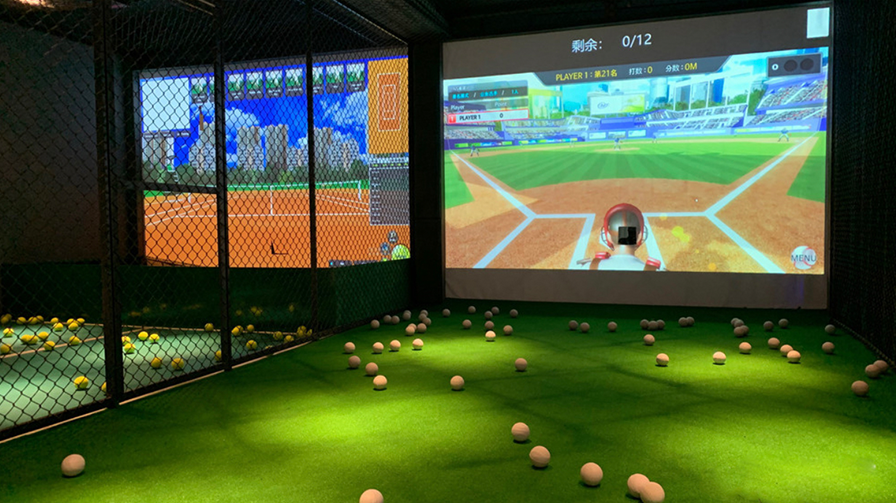
Beyond the Wall: When to Consider an Interactive Alternative
A well-built tennis wall genuinely improves consistency and technique, but it has real limitations — it doesn't return the ball with varied pace or spin, it can't run structured drills, and it offers no scoring or competitive element for players who want more than solo repetition.
Real Rally-Based Gameplay — Automatic ball feeding and return, so sessions keep moving without retrieving balls after every miss.
Practice Mode — Casual, low-pressure rallies.
Training Mode — Focused on swing timing and shot consistency.
Skill Challenge Mode — Competitive, score-based play.
Originally Engineered For — High-traffic commercial venues like sports bars and tennis clubs, built to handle years of frequent use.
For players and households outgrowing what a static wall can offer, Chfuntek's commercial-grade tennis simulator delivers what a backboard fundamentally can't: real rally-based gameplay with automatic ball feeding and return, so sessions keep moving without retrieving balls after every miss. The system runs three distinct modes, giving a household or serious player far more variety than a fixed wall can provide.
Because the system was originally engineered for high-traffic commercial venues like sports bars and tennis clubs, it's built to handle years of frequent use rather than the wear a DIY wall accumulates over time. For anyone who has already built or is considering a practice wall and wants to understand what a more advanced alternative would look like for their space, requesting a configuration consultation is a useful next step.
Ready for More Than a Static Wall?
Get a configuration consultation for Chfuntek's commercial-grade tennis simulator, sized to your space.
Talk to the Chfuntek TeamFrequently Asked Questions
How much space do I need to build a tennis wall?
You generally need at least 20 feet of clear depth in front of the wall for a full swing and recovery footwork, plus enough width — around 10 feet minimum — to accommodate crosscourt shots.
What is the best material for a DIY tennis wall?
Poured concrete offers the truest ball response and greatest durability, while plywood on a sturdy frame is a more affordable and faster option that still performs well if properly sealed and maintained.
How tall should a tennis practice wall be?
A minimum practical height is about 8 feet, though taller walls reduce the frequency of shots sailing over the top, which particularly benefits players practicing serves.
Do I need a permit to build a tennis wall at home?
It depends on your location and whether the structure is permanent. Always check local zoning rules, setback requirements, and homeowners association guidelines before construction begins.
Is a tennis wall as effective as an interactive tennis simulator?
A wall is excellent for basic consistency and repetition at low cost, but it can't vary ball pace or spin, run structured drills, or offer scoring like a commercial-grade interactive simulator can.
Final Thoughts
Building a solid tennis practice wall comes down to a handful of decisions made well before construction starts: the right location, the right materials for your budget and durability needs, correct dimensions, and proper site preparation. Get those fundamentals right, and a practice wall can genuinely improve your game for years. For players who eventually want more than a static rebound surface, a commercial-grade interactive simulator offers the next step up in realism, variety, and competitive play.
Considering something beyond a static practice wall? Contact the Chfuntek team for a configuration consultation on a commercial-grade tennis simulator.


