
In 2026, homeowners can choose from a genuine range of systems that track real shots, run structured drills, and hold up to years of regular play. The challenge isn't finding a tennis simulator for home anymore — it's figuring out which type of system actually fits your space, your skill level, and how often you'll realistically use it.
This guide breaks down what separates a good home installation from a disappointing one, so you can shop with a clear checklist instead of guessing based on marketing copy.
What Makes a Tennis Simulator for Home Actually Good
Not every tennis simulator for home on the market delivers the same experience. The best tennis simulator for home combines a few specific qualities that consumer-grade products often skip to hit a lower price point.
Real ball-and-racket play is the first non-negotiable. Screen-based training apps can help with footwork or reaction drills, but they don't replicate the feel of striking an actual ball. A genuine simulator uses sensors and projection technology alongside real rackets and balls, which is what makes a session feel like tennis rather than a video game.
Consistent ball delivery matters just as much. Systems that rely on manual ball collection between hits break the rhythm of a session and limit how long anyone wants to keep playing. Automated feeding and return is the feature that turns a simulator from a novelty into something a household actually uses week after week.
Multiple play modes round out what separates the best systems from entry-level ones. A single player practicing solo has different needs than two family members competing head-to-head, and a well-designed tennis simulator for home should support both without requiring separate equipment or software.
Matching the System to Who Will Actually Use It
Before comparing specific tennis simulator for home products, it helps to be honest about who's using the setup and how often.
For a household with one dedicated player working on technique, a system with strong training feedback — swing timing, shot consistency, placement accuracy — matters more than flashy game modes. For families with kids or multiple skill levels sharing one setup, adjustable difficulty and casual, competitive modes matter more than advanced training data. For anyone planning to use the simulator daily over several years rather than occasionally on weekends, durability and build quality should outweigh almost every other factor, since a system that wears out after a season ends up costing more than a properly built one from the start.
This is where a lot of buyers get the decision backward — they compare price and feature lists first, then realize months later that the unit wasn't built for the volume of use their household actually puts it through.
Space and Setup Requirements to Check First
A tennis simulator for home needs a dedicated area with enough depth and ceiling clearance for a full swing and rally motion. Garages, converted basements, and purpose-built sports rooms are the most common installation spaces, since they typically offer more usable square footage than a spare bedroom or living area. Before shopping for a specific system, measure your available space and confirm it against the manufacturer's minimum requirements — this single step eliminates a large share of the systems on the market that simply won't fit your room.
Noise and flooring are two details buyers often overlook. Ball impact against netting or screens can be louder than expected, and a proper hitting surface protects both the floor and the simulator's sensors from long-term wear.
Comparing Entry-Level and Commercial-Grade Options
| Feature | Entry-Level | Commercial-Grade |
|---|---|---|
| Ball handling | Manual reset | Automatic feed & return |
| Game modes | Single mode | Multiple structured modes |
| Built for | Occasional weekend play | Years of frequent, daily use |
Entry-level home tennis simulators typically rely on manual ball reset, basic tracking, and a single game mode, which keeps the price low but limits how satisfying repeated sessions feel over time. Commercial-grade systems — originally engineered for high-traffic venues like sports bars and tennis clubs — include automatic ball feeding and return, multiple structured modes, and construction built to handle years of frequent use rather than occasional weekend play.
For buyers treating this as a long-term investment rather than a one-season purchase, that commercial-grade category tends to deliver a noticeably better experience per session, even though the upfront cost is higher. The gap in real-world satisfaction between the two tiers usually becomes obvious within the first few months, once the novelty wears off and daily reliability starts to matter more than the initial spec sheet.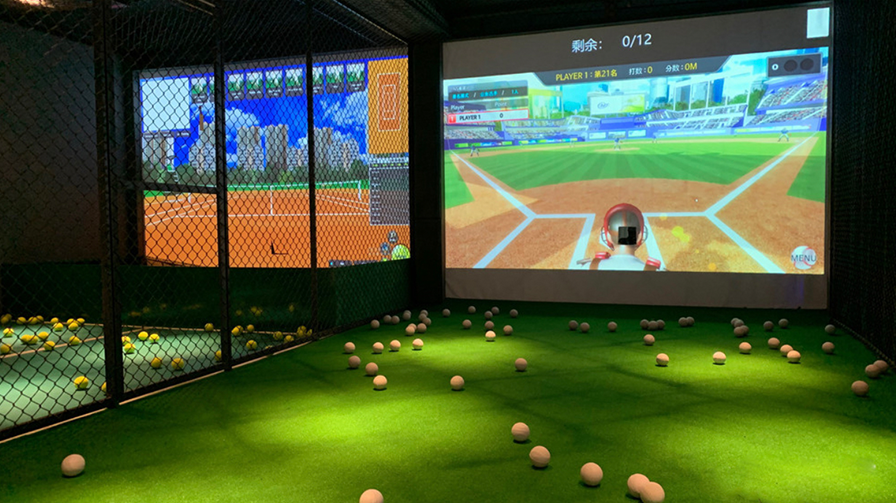
What Chfuntek Offers for Home Installations
Real Rally-Based Gameplay — Real rackets and balls with sensors and projection technology for authentic rallies.
Automatic Ball Feeding & Return — Sessions keep moving without stopping to collect balls between hits.
Practice Mode — Casual, low-pressure rallies.
Training Mode — Focused on swing timing and shot consistency.
Skill Challenge Mode — Competitive, score-based play for households with more than one player.
Originally Engineered For — Sports bars, tennis clubs, and entertainment venues, so it's built to handle far more daily use than a typical home unit.
Chfuntek's commercial-grade tennis simulator was built to handle the daily volume of sports bars, tennis clubs, and entertainment venues, which makes it a strong option for homeowners who want equipment that won't need replacing after a season or two. The system pairs real rally-based gameplay with fully automatic ball feeding and return, so sessions keep moving without anyone stopping to collect balls between hits.
That range of modes means the same installation works for a solo player refining technique and for a family looking for an active way to spend an evening together, without needing separate equipment for each use case.
For anyone comparing the best tennis simulator for home against commercial-grade alternatives, requesting a configuration and cost breakdown before finalizing a decision is the most reliable way to understand how a given system fits your room size and household needs.
Choosing the Best Tennis Simulator for Your Home?
Get a configuration and cost breakdown for Chfuntek's commercial-grade tennis simulator, sized to your room and household.
Talk to the Chfuntek TeamFrequently Asked Questions
What should I look for in the best tennis simulator for home?
Prioritize genuine ball-and-racket play over screen-only simulation, automatic ball feeding and return, multiple game modes for different skill levels, and construction quality built for repeated daily use rather than occasional sessions.
Is a commercial-grade tennis simulator overkill for home use?
Not for households planning frequent, long-term use. Commercial-grade systems are built to handle far more daily wear than entry-level units, which often translates into a more satisfying and reliable experience at home over several years.
How do I know if a tennis simulator will fit my space?
Measure your available room depth, width, and ceiling clearance, then compare those numbers against the manufacturer's minimum space requirements before choosing a specific system.
Can one tennis simulator work for both casual and serious players?
Yes, as long as the system offers multiple modes. A setup with casual practice, structured training, and competitive challenge modes can serve a mixed-skill household without needing separate equipment.
Do home tennis simulators need professional installation?
It depends on the system's complexity, but commercial-grade equipment typically includes installation guidance or support, which helps ensure proper calibration and long-term reliability compared to a self-assembled entry-level unit.
Final Thoughts
The best tennis simulator for home in 2026 isn't necessarily the one with the most impressive spec sheet or the lowest price — it's the one that matches your space, your household's skill range, and how often you'll actually use it. Buyers who start with those questions, rather than shopping by price alone, consistently end up happier with their purchase months down the line, once the initial novelty has worn off and daily reliability is what actually matters.
If you're serious about a long-term installation rather than a short-term experiment, it's worth looking closely at commercial-grade equipment, since the durability difference tends to show up exactly when you need it most.
Ready to compare options for your space and household? Contact the Chfuntek team for a configuration and cost breakdown.


