
Getting the space right first saves you from an expensive mismatch later, and it's a far simpler problem to solve than most people expect once you know what to actually measure. This guide walks through the real space requirements for a home installation, room by room and dimension by dimension.
Why Space Planning Comes Before Hardware Shopping
It's tempting to start by comparing ball-tracking technology or game modes, since that's what most product pages lead with. But none of that matters if the room can't physically accommodate a full swing and rally motion. Measuring first means you shop from a shortlist of systems that will actually fit, rather than falling for a system online and then trying to force your room to accommodate it.
A poorly sized room doesn't just limit gameplay — it creates real safety concerns. A serve that clips a low ceiling or a swing that catches a side wall is how equipment gets damaged and players get hurt.
Room Dimensions: What You Actually Need
Ceiling Height
Ceiling clearance is usually the first constraint that rules out a room. You need enough vertical space for a full overhead serve motion without anyone worrying about catching the ceiling on the backswing or follow-through. Standard residential ceilings in living areas often fall short of what's comfortable, which is one reason garages and basements — typically built with more open overhead space — end up being the most common conversion choice for a home setup.
Room Depth
Depth determines how realistic the rally feels. Too shallow a space and the ball trajectory looks compressed and unnatural; deep enough, and shots track the way they would on an actual court. Depth requirements vary by system, since some rely on rebound netting close to the hitter while others use projection technology that needs more distance to register shot data accurately. Always check a specific system's minimum depth spec rather than assuming a general rule of thumb applies.
Room Width
Width needs to account for the full arc of a swing on both sides, not just the space directly in front of the player. If more than one person will use the setup — say, both a right-handed and left-handed player in the same household — confirm the system handles both stances without needing to physically reposition equipment between sessions.
Common Spaces People Convert
Garages
Garages are the most popular conversion choice for a reason: they typically offer generous depth, decent ceiling height, and a hard floor surface that's easy to adapt. The tradeoff is climate control — garages get hot in summer and cold in winter, which affects both comfort and, in some cases, the electronics inside the equipment.
Basements
Basements often provide strong ceiling clearance and a naturally enclosed, quiet space, which helps with the acoustic side of things. Humidity control matters more here than in a garage, since dampness can affect flooring, netting, and electronic components over time.
Dedicated Sports Rooms
For buyers building a purpose-designed space from scratch, a dedicated room offers the most control over dimensions, flooring, lighting, and acoustic treatment — but it's also the most expensive route.
Details That Get Overlooked Until Move-In Day
Flooring: A surface with too much grip can strain knees and ankles during quick lateral movement, while one that's too slick creates a slipping risk. Purpose-built sports flooring or a proper hitting mat solves both problems and protects the space underneath.
Noise: Ball impact against netting or a projection screen carries more sound than people anticipate, and that sound travels through walls and floors more easily than expected. If the room shares a wall with a bedroom, home office, or a neighbor, some level of acoustic treatment isn't optional — it's part of the space planning, not an afterthought.
Lighting: Lighting affects both visibility and, for projection-based systems, image quality. A room that can be reasonably darkened will generally deliver a better experience than one with uncontrollable overhead lighting.
Measuring Your Space Before You Shop
Start with a simple checklist: measure ceiling height at the lowest point in the room (accounting for beams, light fixtures, and ductwork, not just the structural ceiling), measure usable depth from the hitting position to the back wall or screen, and measure width with enough margin on both sides for a full swing arc. Write those three numbers down and compare them against the minimum space requirements listed by any system you're considering — this single step eliminates most of the products that simply won't work in your room before you waste time comparing features.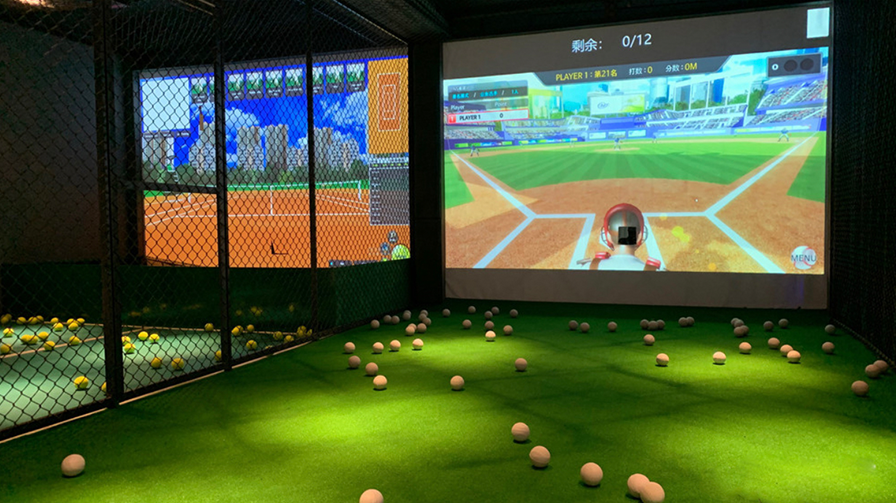
Where Chfuntek Fits Into This Decision
Real Rally-Based Gameplay — Real rackets and balls with sensors and projection technology for authentic rallies.
Automatic Ball Feeding & Return — Sessions keep moving without pausing to collect balls manually.
Practice Mode — Casual, low-pressure rallies.
Training Mode — Focused on swing timing and shot consistency.
Skill Challenge Mode — Competitive, score-based play for households with more than one player.
Originally Engineered For — High-traffic venues like sports bars and tennis clubs, meaning build quality is designed for far more sustained use than a typical consumer unit.
For buyers who want equipment that holds up to years of regular use rather than needing replacement after a season, Chfuntek's commercial-grade tennis simulator was originally engineered for high-traffic venues like sports bars and tennis clubs — meaning the build quality and components are designed for far more sustained use than a typical consumer unit. The system combines real rally-based gameplay with automatic ball feeding and return, so sessions keep moving without pausing to collect balls manually, which matters for households that plan to use their space regularly rather than occasionally.
Because the system offers Practice Mode, Training Mode, and Skill Challenge Mode on the same installation, it scales naturally from a solo player working on fundamentals to a full family session, without needing separate setups for different skill levels.
Not Sure If Your Room Will Work?
Request a configuration consultation to confirm fit for Chfuntek's commercial-grade tennis simulator before you buy.
Talk to the Chfuntek TeamFrequently Asked Questions
What is the minimum ceiling height for a home tennis simulator?
Ceiling requirements vary by system, but you generally need enough clearance for a full overhead serve motion without risk of catching the ceiling — which is why garages and basements, with their typically higher overhead space, are common conversion choices.
Can a home tennis simulator fit in a two-car garage?
In many cases, yes. A standard two-car garage often provides enough depth and width for a home installation, though exact fit depends on the specific system's space requirements and any obstructions like support beams or garage door tracks.
Do I need a dedicated room, or can I use a multi-purpose space?
A multi-purpose space can work as long as it meets the minimum height, depth, and width requirements, though a dedicated room offers more control over flooring, lighting, and acoustic treatment for a better long-term experience.
How much noise does a home tennis simulator make?
Ball impact against netting or a screen is louder than most people expect, and sound can travel through shared walls or floors. Rooms adjacent to bedrooms or neighbors typically benefit from some level of acoustic treatment.
Is a basement or garage better for a home tennis simulator?
Both work well, though garages often offer more depth and easier flooring conversion, while basements tend to be quieter and better enclosed. The better choice usually comes down to which space in your home meets the height and depth requirements with the least modification.
Final Thoughts
Getting your room right is the single biggest factor in whether a home installation feels worth it years later or ends up as an underused corner of the garage. Measure ceiling height, depth, and width before you shop, account for flooring, noise, and lighting as part of the plan rather than an afterthought, and choose equipment built to handle the frequency of use you actually expect.
Get that sequence right, and the hardware decision becomes far easier than it looks from the outside.
Ready to check your space against a real system's requirements? Contact the Chfuntek team for a configuration consultation.


