
If you are researching a VR tennis simulator for an FEC, sports bar, arcade, shopping mall, tennis center, hotel, or resort, a realistic 2026 budget is typically about $8,000–$35,000+ for a commercial VR-based tennis attraction, depending on the hardware, tracking system, display or projection setup, software, player capacity, and installation requirements. Premium turnkey systems can cost more.
The important point is that the equipment price is only part of the investment. For commercial buyers, the better question is: what does the complete system cost, and how much revenue can it generate per square foot? This guide explains the major cost factors, what to include in a supplier quotation, and how to evaluate a VR tennis simulator before making a purchasing decision.
VR Tennis Simulator Cost in 2026: Quick Price Guide
There is no single universal price for a commercial VR tennis simulator because different systems use very different technologies.
| System Type | Typical 2026 Budget | Best For |
|---|---|---|
| Entry-level VR tennis setup | $8,000–$12,000 | Small venues, demos, pop-ups |
| Commercial VR tennis simulator | $12,000–$25,000 | FECs, arcades, sports bars |
| Premium interactive tennis system | $20,000–$35,000+ | Hotels, tennis centers, premium venues |
| Custom multi-player installation | $35,000+ | Large FECs, malls, entertainment centers |
These figures should be treated as planning ranges rather than fixed market prices. Commercial VR and sports-simulation equipment varies significantly by configuration. For example, current 2026 commercial VR attractions can range from several thousand dollars to tens of thousands of dollars depending on tracking, player capacity, motion systems, and the overall installation.
A consumer VR tennis game is a completely different product category. Some VR tennis software is available for less than $30, but the software price does not represent the cost of a commercial attraction with equipment, tracking, enclosure, installation, and venue-ready operation.
What Determines VR Tennis Simulator Price?
When comparing quotations from manufacturers and dealers, look beyond the headline equipment price. Six factors usually have the biggest impact.
1. Tracking and Sensing Technology
Tracking is one of the most important components of an interactive tennis system. A basic VR setup may rely primarily on headset and controller tracking. A commercial interactive tennis simulator can use additional cameras, sensors, ball tracking, or other technologies to create a more responsive experience. For a commercial venue, tracking accuracy matters because customers expect the system to respond naturally to their movements and shots.
2. Display and Immersion
The visual system also affects the price. Possible configurations include VR headsets, large projection screens, LED or digital displays, enclosed interactive courts, and hybrid VR/AR systems.
For an FEC or shopping mall, a large visible display can provide an additional advantage: people walking past can immediately understand what other customers are playing. This can help turn the simulator itself into a marketing attraction.
3. Software and Game Content
A commercial simulator should offer more than attractive graphics. Before purchasing, ask how many game modes are included, whether players can compete against each other, whether difficulty levels are adjustable, whether the system can receive software updates, whether the software is licensed for commercial use, and whether the manufacturer can add or customize content.
Commercial buyers should also clarify whether software updates, technical support, and future content are included in the quotation.
4. Player Capacity
A single-player training-focused system and a multiplayer entertainment attraction serve different business models. For FECs, arcades, sports bars, and hotels, multiplayer modes can increase social interaction and make the attraction suitable for friends competing against each other, family entertainment, birthday parties, corporate events, tennis challenges, and tournament-style activities.
If your venue expects group traffic, player throughput should be considered alongside the initial purchase price.
5. Installation and Venue Requirements
The final project cost can increase when installation requires additional construction, electrical work, flooring, lighting, networking, or customized theming. Commercial buyers should request a complete installation specification covering:
This makes supplier quotations easier to compare.
6. After-Sales Service
For a commercial venue, downtime has a direct financial cost. A low-cost simulator that is difficult to repair may become more expensive over several years than a higher-quality system supported by a reliable manufacturer.
Ask suppliers about warranty period, remote technical support, spare parts availability, response time, software troubleshooting, installation support, and operator training. For international buyers, after-sales service is especially important because technical problems may otherwise cause extended downtime.
VR Tennis Simulator vs. Traditional Tennis Simulator
A VR tennis simulator generally emphasizes virtual immersion, while a traditional or projection-based interactive tennis simulator may emphasize physical movement, large-screen gameplay, ball interaction, and visible entertainment. The best choice depends on your business model.
| Factor | VR Tennis Simulator | Interactive Tennis Simulator |
|---|---|---|
| Immersion | Very high | High |
| Physical interaction | Depends on system | Usually high |
| Spectator appeal | Moderate to high | High |
| Multiplayer potential | High | High |
| Training applications | Good | Excellent when tracking is accurate |
| FEC applications | Excellent | Excellent |
| Sports bar applications | Good | Excellent |
| Space requirements | Often compact | Depends on configuration |
Neither technology is automatically better. The right choice depends on venue size, target customers, session model, budget, and desired level of physical interaction. For entertainment venues, an interactive system with a large visible playing area can have an advantage because spectators can understand the activity without wearing a headset.
How Much Should an FEC Budget for a VR Tennis Simulator?
For an FEC, the equipment purchase should be considered together with the revenue model. For example, suppose a venue invests $20,000 in a commercial tennis attraction and charges $10 per session.
This is only an illustrative calculation — not a guaranteed ROI. Actual results depend on location, pricing, operating hours, utilization, staffing, marketing, maintenance, and customer demand.
A stronger business model can combine individual sessions with birthday packages, group competitions, memberships, corporate events, school activities, tennis training, sports-themed promotions, and food and beverage packages. The goal is not simply to sell simulator sessions — the goal is to make the equipment a repeat-visit attraction.
Is a VR Tennis Simulator Worth It for Sports Bars and Hotels?
It can be, particularly when the venue wants to add an interactive sports attraction without building a full outdoor tennis court. Sports bars can use tennis simulators for competitions and event nights, while hotels and resorts can provide guests with an indoor sports activity regardless of weather.
For shopping malls and FECs, the biggest opportunity is often experience visibility. Interactive sports attractions can encourage people to stop, watch, and participate. Commercial sports simulators are increasingly positioned as attractions rather than simply training tools, with FECs, sports venues, hotels, and entertainment facilities using them to create additional activities and cross-selling opportunities.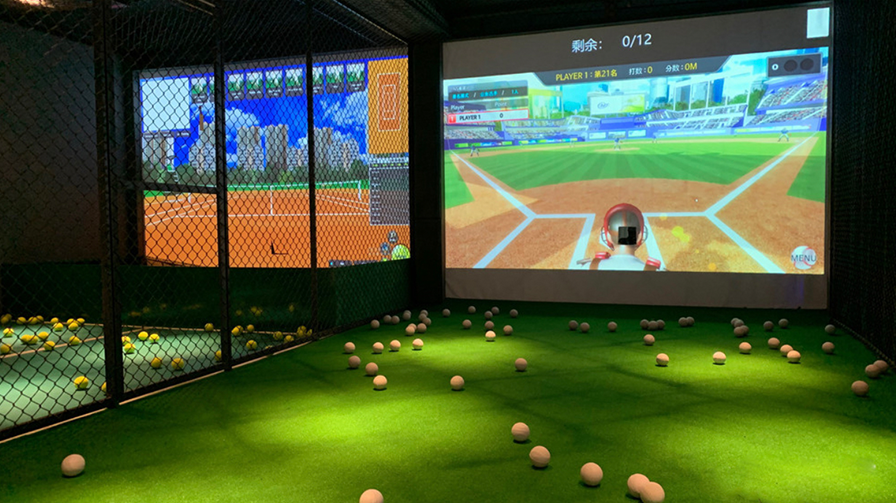
What Should Be Included in a Commercial Tennis Simulator Quote?
When requesting a quotation from a manufacturer such as CHFUNTEK, ask for a complete equipment list rather than only the machine price. A professional quotation should clearly identify:
- Main simulator hardware
- Tracking or sensing system
- Display or projection system
- Computer and control system
- Tennis software and game modes
- Controllers or tennis equipment
- Installation requirements
- Shipping terms
- Warranty
- Spare parts
- Remote technical support
- Operator training
This approach helps dealers, procurement managers, and investors compare different suppliers on a like-for-like basis.
For entertainment venues looking for an interactive tennis simulator, CHFUNTEK focuses on commercial sports-entertainment equipment designed for venues rather than only home users.
The key consideration is whether the configuration matches your available space, customer profile, expected daily usage, and business model. If you are planning a new FEC, sports bar, arcade, tennis center, hotel, or resort project, CHFUNTEK can help you evaluate the appropriate simulator configuration and commercial application for your venue.
How to Choose the Right VR Tennis Simulator in 2026
Before placing an order, use this five-step checklist:
Decide whether your primary goal is entertainment, training, events, or a combination.
Confirm the available length, width, ceiling height, safety clearance, and power requirements before selecting equipment.
Estimate realistic sessions per day instead of using maximum theoretical capacity.
Compare equipment, freight, installation, software, maintenance, and warranty — not just the factory price.
A commercial simulator is a long-term business asset. Manufacturer support can be just as important as the hardware specification.
Planning a Tennis Attraction for Your Venue?
Contact CHFUNTEK to discuss your space, target customers, and commercial requirements.
Talk to the Chfuntek TeamFrequently Asked Questions
How much does a VR tennis simulator cost in 2026?
A commercial VR tennis simulator can typically require around $8,000–$35,000+, depending on configuration. Custom commercial installations can cost more.
Is a VR tennis simulator profitable?
It can be profitable when placed in a suitable high-traffic venue and operated with a strong pricing and utilization strategy. Profitability depends on local demand, session pricing, operating costs, and utilization.
What is the cheapest way to start a tennis simulator business?
A compact entry-level commercial system can reduce initial investment. However, buyers should prioritize commercial durability, software licensing, tracking performance, warranty, and after-sales support rather than choosing solely by the lowest price.
How much space does a tennis simulator need?
Space requirements vary considerably by technology and configuration. A supplier should confirm the exact footprint, safety clearance, ceiling height, and installation requirements before purchase.
Can a tennis simulator be used for both entertainment and training?
Yes. Depending on the system, tennis simulators can support recreational games, competitions, skill practice, and training applications. Buyers should confirm the available software and tracking capabilities before ordering.
Should I buy a VR or interactive tennis simulator?
Choose based on your venue. VR can provide strong immersion in a compact format, while large-screen interactive systems can offer strong spectator appeal and physical interaction. For FECs and sports bars, the latter can be particularly attractive when visibility and group play are important.
Final Takeaway
The answer to "How much does a VR tennis simulator cost in 2026?" is not simply one number. For commercial buyers, a reasonable planning range is approximately $8,000–$35,000+, with the final investment determined by hardware, tracking, software, display technology, player capacity, installation, and support.
For FEC operators, sports bars, arcades, shopping malls, tennis centers, hotels, resorts, dealers, and investors, the best system is not necessarily the cheapest one. The right simulator is the one that delivers reliable operation, strong customer engagement, manageable maintenance, and a realistic path to return on investment.
If you are planning to add an interactive tennis attraction to your venue, contact CHFUNTEK to discuss your space, target customers, and commercial requirements and find a suitable tennis simulator configuration.


