
A Tennis Simulator can offer more than a way to hit tennis balls indoors. Its game modes determine how players interact with the system, what skills they can work on, and how enjoyable the experience is for different audiences. Most interactive tennis experiences can be organized around three main purposes: casual practice, focused skill development, and competitive challenges. Each serves a different player motivation, from enjoying a few rallies to testing accuracy and reaction speed.
For commercial venues, having these options in one system is particularly useful. Beginners can start with a relaxed experience, regular players can work on their fundamentals, and groups of friends can compete through score-based activities. Understanding how these modes work helps venue operators choose the right experience for their customers.
- Practice Mode: Provides an accessible way to enjoy tennis rallies and casual play.
- Training Mode: Focuses on swing timing, ball control, and shot consistency.
- Skill Challenge Mode: Tests accuracy, reaction speed, and coordination through interactive challenges.
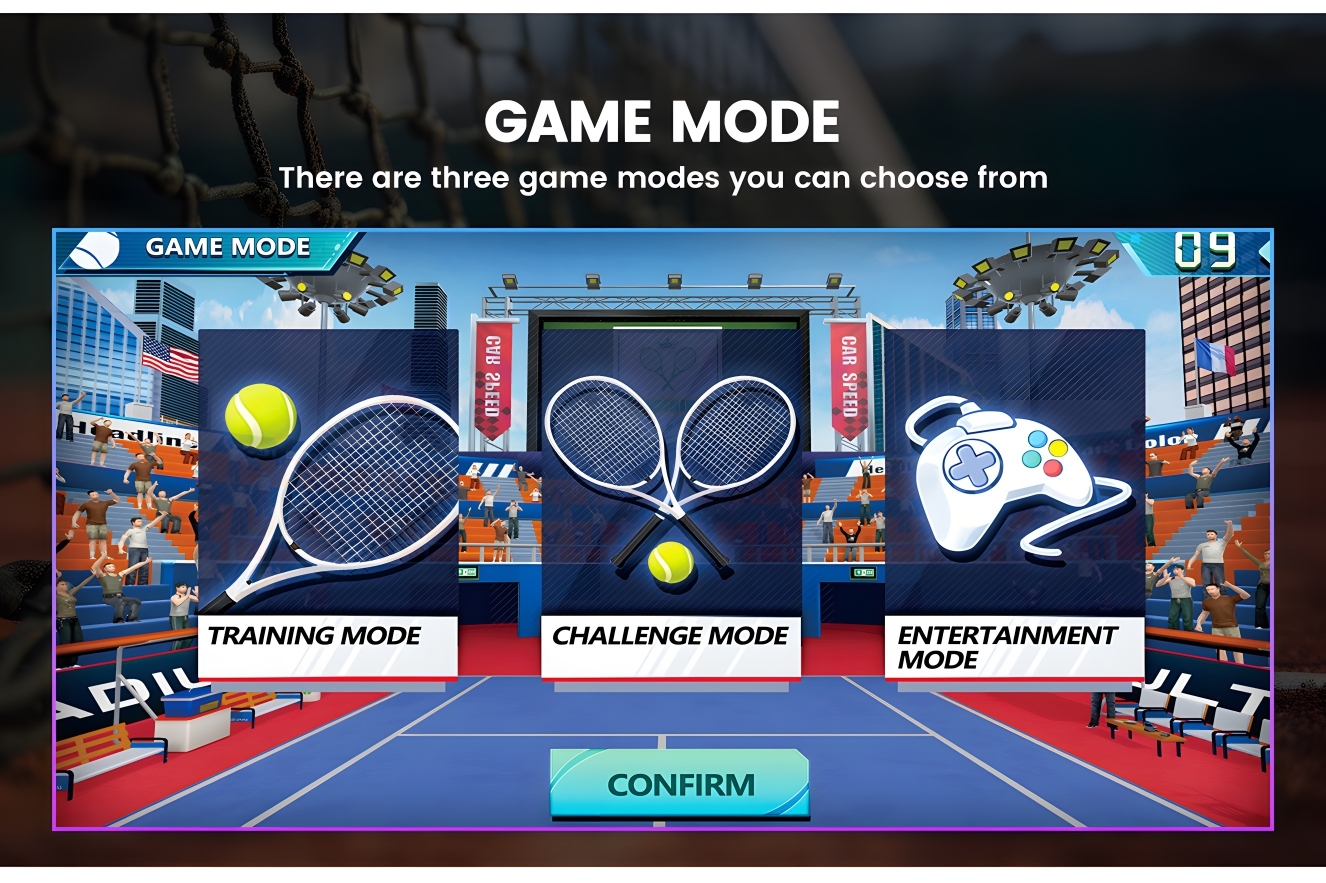
Why Tennis Simulator Game Modes Matter
Not every person who enters an indoor sports venue has the same goal. Some visitors want to try tennis for the first time. Others already play regularly and want to work on their technique. Groups may simply be looking for a fun activity they can enjoy together.
A single type of gameplay may not satisfy all these expectations. Different Tennis Simulator game modes help address different levels of experience and reasons for playing.
For players, mode variety makes the experience less repetitive. Instead of hitting balls without a clear objective, they can choose between relaxed rallies, focused practice, or a challenge with a measurable target.
For commercial operators, this flexibility can also make an attraction relevant to a wider customer base. A tennis club may emphasize training, while an entertainment center may promote casual play and group challenges. The same equipment can support different activities without requiring separate machines for each purpose.
1. Practice Mode: Enjoy Tennis Without Pressure
Practice Mode is the natural starting point for players who want to enjoy tennis without concentrating on formal training objectives. It offers a more relaxed way to experience rallies, hit real tennis balls, and become familiar with the interactive system.
What Can Players Expect?
In Practice Mode, players can focus on enjoying the rhythm of hitting and returning balls. The experience can include realistic rallies, point scoring, and friendly play with other participants, depending on the selected gameplay configuration.
Rather than asking players to achieve a specific technical target, this mode makes participation the priority. It is especially useful when introducing the activity to people who may not have played tennis before.
Who Is Practice Mode Suitable For?
- Beginners: People who want to try tennis in a less demanding environment.
- Families: Parents and children looking for an active indoor activity.
- Casual players: Visitors who enjoy hitting balls without following a structured training plan.
- Groups of friends: Players who want to enjoy rallies and friendly competition.
For family entertainment centers, hotels, resorts, and sports bars, Practice Mode can be an effective way to introduce the attraction. Customers do not need to be experienced tennis players to understand its basic appeal.
2. Training Mode: Focus on Tennis Fundamentals
Training Mode is designed for players who want to use their indoor sessions more purposefully. Instead of focusing mainly on entertainment, this mode emphasizes fundamental elements of tennis, including swing timing, ball control, and shot consistency.
What Skills Can Players Work On?
- Swing timing: Develop a better sense of when to make contact with the incoming ball.
- Ball control: Practice making more controlled and deliberate shots.
- Shot consistency: Work toward producing more repeatable contact and placement.
- Hand-eye coordination: Improve the connection between visual tracking and racket movement.
These fundamentals are relevant to players at different stages. Beginners can use training activities to become more comfortable with the racket and ball, while experienced recreational players can focus on specific aspects of their game.
How to Make a Training Session More Effective
A useful approach is to give each session one clear objective rather than trying to improve everything at once. For example, a player might focus on consistent contact during one session and controlled shot placement during another.
Players should also begin at a manageable pace and increase the difficulty as they become more comfortable. A tennis simulator can provide a structured indoor practice environment, but it should complement rather than replace on-court coaching, movement training, and real match experience.
For tennis clubs and indoor sports facilities, Training Mode provides an additional activity for members when outdoor courts are unavailable or when players want a different practice format.
3. Skill Challenge Mode: Turn Tennis Skills Into Interactive Games
Skill Challenge Mode adds a competitive objective to the playing experience. Rather than simply hitting balls, players respond to interactive challenges that test their accuracy, reaction speed, and coordination.
What Makes Skill Challenges Different?
The main difference is the objective. Players are encouraged to complete a task, respond to a target, or perform within a challenge format. This gives each shot a clearer purpose and makes the activity easier for spectators and friends to follow.
Depending on the challenge available in the system, gameplay may emphasize:
- Accuracy: Directing shots toward designated targets or areas.
- Reaction speed: Responding to changing visual prompts or gameplay situations.
- Coordination: Combining visual attention, movement, and racket control.
- Competitive play: Comparing results and encouraging players to try again.
Why Is This Mode Useful for Entertainment Venues?
Interactive challenges are easy to understand and can give visitors a reason to replay an activity. Friends can take turns, compare their results, and encourage one another to improve. This creates a more engaging group experience than a practice session with no shared objective.
For family entertainment centers, arcades, and sports bars, Skill Challenge Mode can help turn tennis into a spectator-friendly activity. People waiting for their turn can follow the action, while players have a clear goal to work toward.
How to Choose the Right Tennis Simulator Mode
The best mode depends on who is playing and what they want from the session. A practical way to choose is to match the gameplay objective with the user's experience and motivation.
- First-time players: Start with Practice Mode to understand the basic experience.
- Players developing fundamentals: Choose Training Mode and focus on one skill at a time.
- Friends and groups: Try Skill Challenge Mode to add a shared goal and friendly competition.
- Mixed-ability groups: Begin with casual play, then let more confident players try training or challenges.
For venue operators, it is worth considering the customer profile and the purpose of the installation. A tennis club may use Training Mode more frequently, while an FEC may place greater emphasis on Practice Mode and Skill Challenge Mode. Hotels and resorts can offer different options depending on whether guests are looking for casual recreation or a more active experience.
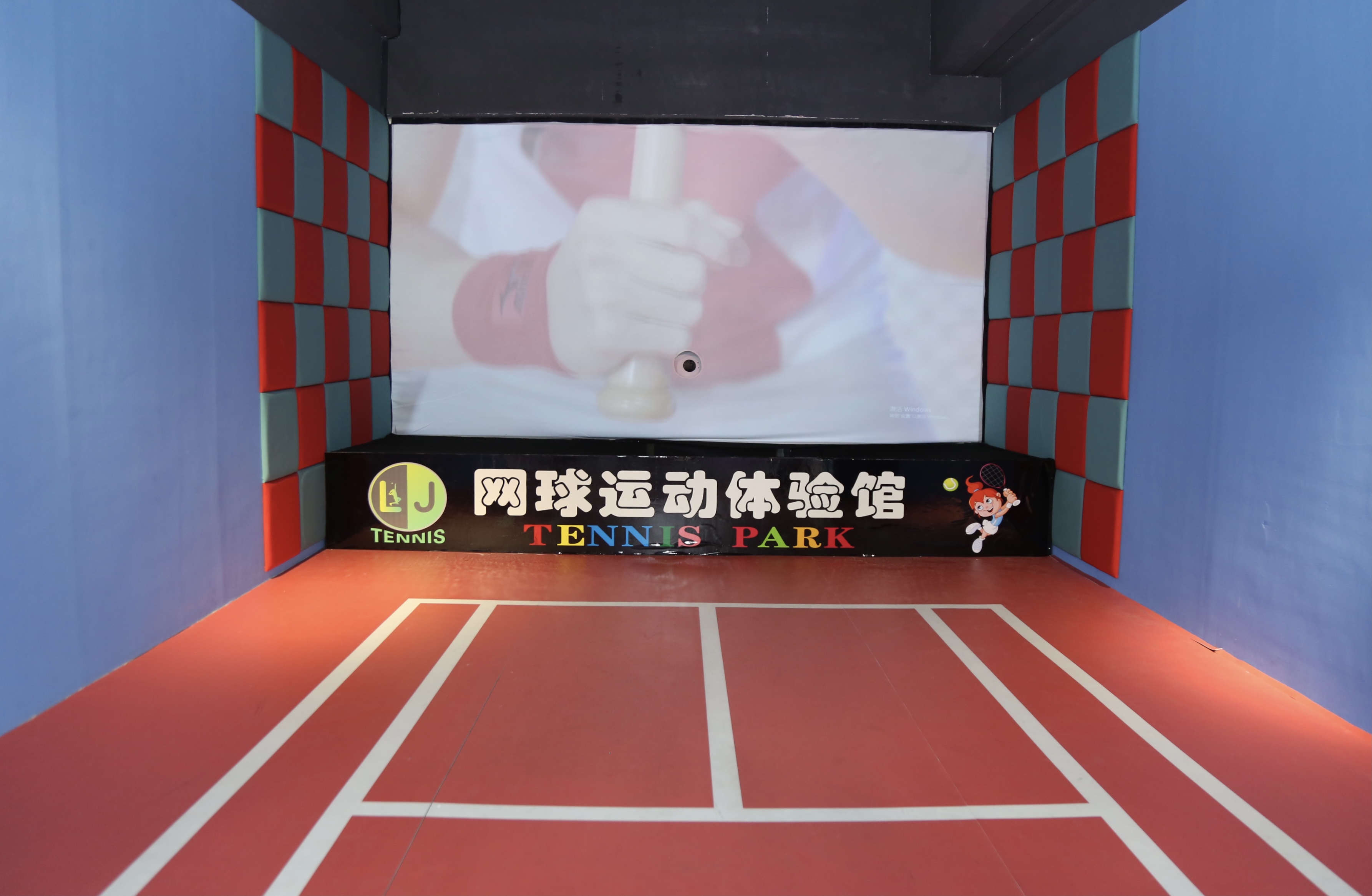
How Chfuntek Combines Practice, Training, and Challenges
Chfuntek's indoor interactive tennis simulator brings together real tennis gameplay and multiple interactive modes for commercial entertainment and training environments. Players use real rackets and tennis balls, while the interactive projection responds to their shots to create an engaging indoor experience.
The system offers three key gameplay options:
- Practice Mode: Enjoy realistic rallies, casual play, point scoring, and friendly competition.
- Training Mode: Focus on swing timing, ball control, and shot consistency.
- Skill Challenge Mode: Test accuracy, reaction speed, and coordination through interactive challenges.
Another practical feature is automatic ball feeding and return. The built-in ball machine delivers and retrieves balls, reducing the need for players or staff to collect them manually between shots. This helps keep sessions moving and supports more convenient operation in commercial venues.
Chfuntek's tennis simulator is designed for applications such as tennis clubs, sports bars, entertainment centers, hotels, and resorts. Professional installation and one-on-one operator training are also available to help venues get started.
Looking for an Interactive Tennis Attraction?
Whether you operate a tennis club, FEC, sports bar, or hotel, Chfuntek can help you explore an indoor tennis solution that combines practice, training, and interactive challenges.
Explore Chfuntek Tennis Simulator or contact our team to discuss your project requirements.
Frequently Asked Questions About Tennis Simulator Game Modes
What are the main game modes in a tennis simulator?
The main modes offered by Chfuntek are Practice Mode, Training Mode, and Skill Challenge Mode. They support casual rallies, focused skill development, and interactive challenges.
Which tennis simulator mode is best for beginners?
Practice Mode is a suitable starting point for beginners because it emphasizes enjoying the game and becoming familiar with the equipment. Players can move to Training Mode as they become more comfortable.
Can a tennis simulator help improve tennis skills?
Yes. Training Mode can help players work on swing timing, ball control, and shot consistency. Skill challenges can also provide opportunities to practice accuracy, reaction speed, and coordination. A simulator is best used as a supplement to regular court practice and coaching.
What is the difference between Training Mode and Skill Challenge Mode?
Training Mode focuses on tennis fundamentals and repeatable practice. Skill Challenge Mode uses interactive tasks to test abilities such as accuracy, reaction speed, and coordination, adding a more competitive element.
Is a tennis simulator suitable for commercial entertainment venues?
Yes. An interactive tennis simulator can be used in FECs, sports bars, tennis clubs, hotels, resorts, and indoor entertainment centers. Multiple modes help venues serve casual visitors, regular players, and groups with different interests.
Does an interactive tennis simulator require manual ball collection?
Chfuntek's tennis simulator features automatic ball feeding and return, reducing the need for players or staff to collect balls manually between shots.
Final Thoughts
The value of a Tennis Simulator is not limited to reproducing the experience of hitting a tennis ball indoors. Different game modes give players different reasons to participate. Practice Mode makes the experience approachable, Training Mode supports focused skill development, and Skill Challenge Mode adds goals and friendly competition.
For commercial venues, this combination creates more ways to engage visitors with different experience levels and interests. By bringing real tennis gameplay, automatic ball feeding and return, and interactive game modes together, Chfuntek offers an indoor tennis solution for both entertainment and training applications.
Interested in adding an interactive tennis simulator to your venue? Visit Chfuntek's Tennis Simulator page to learn more about the product and discuss your project.


