
Key Takeaways
- Space: a home indoor tennis simulator needs about 20 ft of depth and 9–11 ft of ceiling; commercial installs need 20–25 ft of depth and 12–14 ft of ceiling.
- Cost: roughly $3,000–$30,000+ for home use and $20,000–$60,000+ for commercial venues.
- Commercial must-haves: full automation, at least three game modes, and commercial-grade durability.
- Biggest mistake: buying on the headline price instead of the total project cost.
This guide covers how an indoor tennis simulator works, what space and cost to plan for, and which features actually matter depending on whether you are buying for personal use or commercial operation.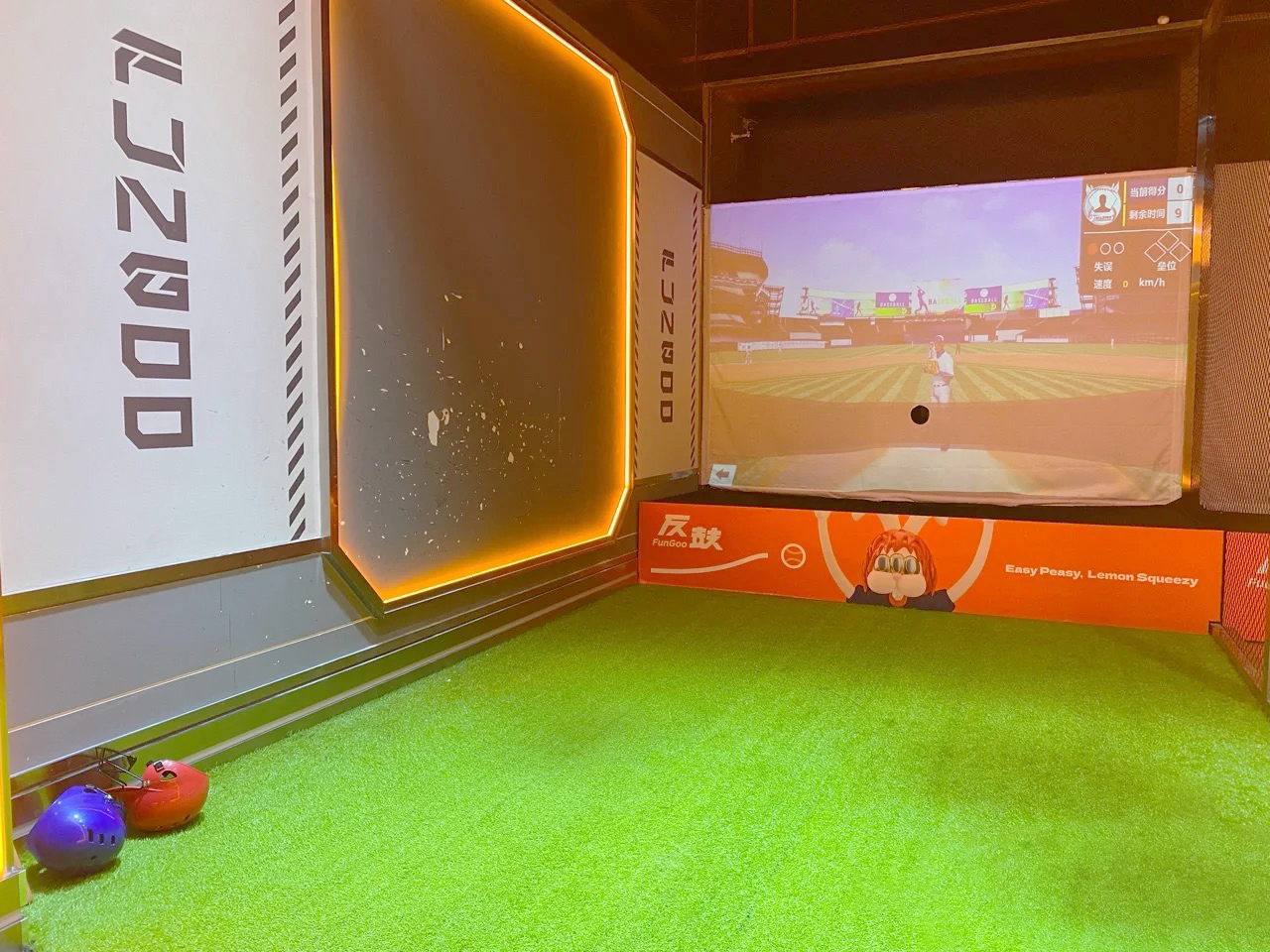 How an Indoor Tennis Simulator Works
The technology varies between consumer and commercial-grade systems, but the core concept is consistent. The player stands in a hitting zone facing a large impact-resistant screen. An automatic ball feeding mechanism delivers balls at controlled intervals, angles, and speeds. The player strikes the ball with a real racket — the same motion, grip, and contact as an actual tennis shot. Sensors detect ball impact and player movement, translating the physical action into on-screen gameplay responses in real time.
The interactive layer is what separates it from a simple ball machine or wall practice. The screen displays a game environment — targets, courts, virtual opponents, scoring challenges — that responds to where and how the player hits. A well-aimed shot into the top corner triggers a different response than a mistimed shot off-center. That feedback loop creates genuine engagement, and it is why an indoor tennis simulator works commercially as guest entertainment rather than only as a training tool.
Indoor Tennis Simulator vs. Ball Machine vs. Real Court
Buyers often compare three options, and each solves a different problem. A ball machine is the cheapest way to get repetition, but it offers no scoring or game layer. A real indoor court gives the full match experience, but needs far more floor area, court booking, and usually a playing partner. An indoor tennis simulator sits in between: real racket-and-ball contact in a compact footprint, with scored gameplay that works solo or in groups.
If your goal is pure stroke repetition at the lowest cost, a ball machine may be enough. If you want engagement, scoring, and something guests will actually line up to try, an indoor tennis simulator is the better fit.
Indoor Tennis Simulator for Home Use
What Home Setups Actually Require
The minimum space for a functional home indoor tennis simulator is typically 20 feet (6 meters) of depth from the hitting position to the screen, 10 feet (3 meters) of width for a comfortable swing arc on both forehand and backhand sides, and 9 to 11 feet (2.7 to 3.3 meters) of ceiling clearance. A finished basement, double garage, or large spare room can accommodate this in most cases — though ceiling height eliminates more otherwise suitable spaces than any other factor. Beyond floor area, you need a single-phase electrical supply, a flat floor for the hitting mat, and adequate screen depth so the ball reaches the screen cleanly. Measure carefully before purchasing rather than relying on marketing dimensions.
What Home Users Typically Want
For serious recreational players, the priority is usually practice quality — realistic ball delivery, accurate placement control, and feedback that maps onto real tennis mechanics. Systems with variable delivery (speed range, angle variation, spin options) generate more useful sessions than fixed-delivery alternatives. Game modes and scoring add a social dimension that makes the system usable for family play or friendly competition, not just solo practice. A competitive scored mode is what turns a practice tool into something guests want to try.
Cost for Home Installations
Entry-level home setups start around $3,000 to $8,000 for basic configurations — typically a portable hitting net and ball machine without screen-based gameplay. Full-featured home simulators with genuine interactive gameplay, large projection screens, and automatic ball feeding run $10,000 to $30,000 depending on screen size, delivery sophistication, and game content. Custom permanent home studio installations at the premium end can exceed this range.
Indoor Tennis Simulator for Clubs and Commercial Venues
What Changes for Commercial Installation
A commercial indoor tennis simulator operates under fundamentally different conditions than a home system. It runs 8 to 12 hours per day, is used by guests with no instruction, and must serve children, casual adults, and experienced players back-to-back without operator adjustment. These requirements push commercial specifications in a clear direction: full-cycle automation, multi-mode game content deep enough to sustain repeat visits, adjustable difficulty that needs no manual intervention, commercial-grade screen impact resistance, and mechanical components rated for sustained daily use.
Three Game Modes That Matter for Commercial Venues
Practice Mode is the entry point for first-time and recreational players. Low-pressure, accessible delivery — no scoring, no challenge intensity — lets guests understand the system and experience success immediately. This is the mode that converts a hesitant first-time user into a paying return visitor. A system that throws beginners straight into a competitive challenge loses the casual demographic that makes up most commercial venue traffic.
Training Mode serves the skill-focused segment — club members keeping sharp in the off-season, hotel guests who play regularly, and junior players in structured development programs. Repeatable delivery patterns, structured challenge sequences, and performance feedback are the relevant features.
Skill Challenge Mode drives the repeat-visit behavior that sustains commercial revenue. Competitive, scored play with persistent leaderboards gives guests a reason to return: defend a ranking, beat a personal best, or outscore a friend. It turns a one-time attraction into a recurring one.
Space Requirements for Commercial Installation
Commercial setups need more ceiling clearance than home setups because overhead shots and serve motions require the full range of a natural swing. Most configurations need 12 to 14 feet (3.7 to 4.3 meters) of ceiling height, 20 to 25 feet (6 to 7.6 meters) of depth, and enough width for the full swing arc plus spectator clearance. Plan spectator space alongside the hitting zone deliberately — watching others play is part of the social experience that makes the attraction commercially engaging.
Cost for Commercial Installations
Commercial indoor tennis simulator installations typically run $20,000 to $60,000+ depending on screen size, automation level, game content depth, installation complexity, and after-sales support. Systems in the $20,000 to $45,000 range cover most FEC, sports bar, hotel, and tennis club applications with full automation, three game modes, adjustable difficulty, and commercial durability. Budget the total project cost — hardware, freight, installation, commissioning, and first-year support — rather than the equipment price alone.
| Factor | Home Installation | Commercial Installation |
|---|---|---|
| Depth required | ~20 ft (6 m) | 20–25 ft (6–7.6 m) |
| Ceiling clearance | 9–11 ft (2.7–3.3 m) | 12–14 ft (3.7–4.3 m) |
| Typical cost range | $3,000–$30,000+ | $20,000–$60,000+ |
| Automation required | Partial acceptable | Full-cycle essential |
| Game mode depth | 1–2 modes sufficient | 3+ modes required for ROI |
| Staff between sessions | User manages independently | Must run autonomously |
How to Choose the Right Indoor Tennis Simulator
Whatever the context, work through the same short checklist before you commit to a system:
1. Confirm your space first. Measure depth, width, and the lowest point of the ceiling, including beams and lighting. Ceiling height is the most common dealbreaker.
2. Match automation to usage. A home user can tolerate manual ball collection. A commercial operator cannot — automatic feeding and return is what keeps throughput up during peak hours.
3. Check game content depth. One mode wears thin quickly. Look for accessible entry play, structured training, and a scored competitive mode.
4. Ask about durability and support. For commercial use, confirm that components are rated for daily cycle counts, and that installation, operator training, and after-sales support are part of the quote.
5. Price the whole project. Include freight, installation, commissioning, and first-year support alongside the equipment itself.
How Chfuntek's Indoor Tennis Simulator Fits Both Contexts
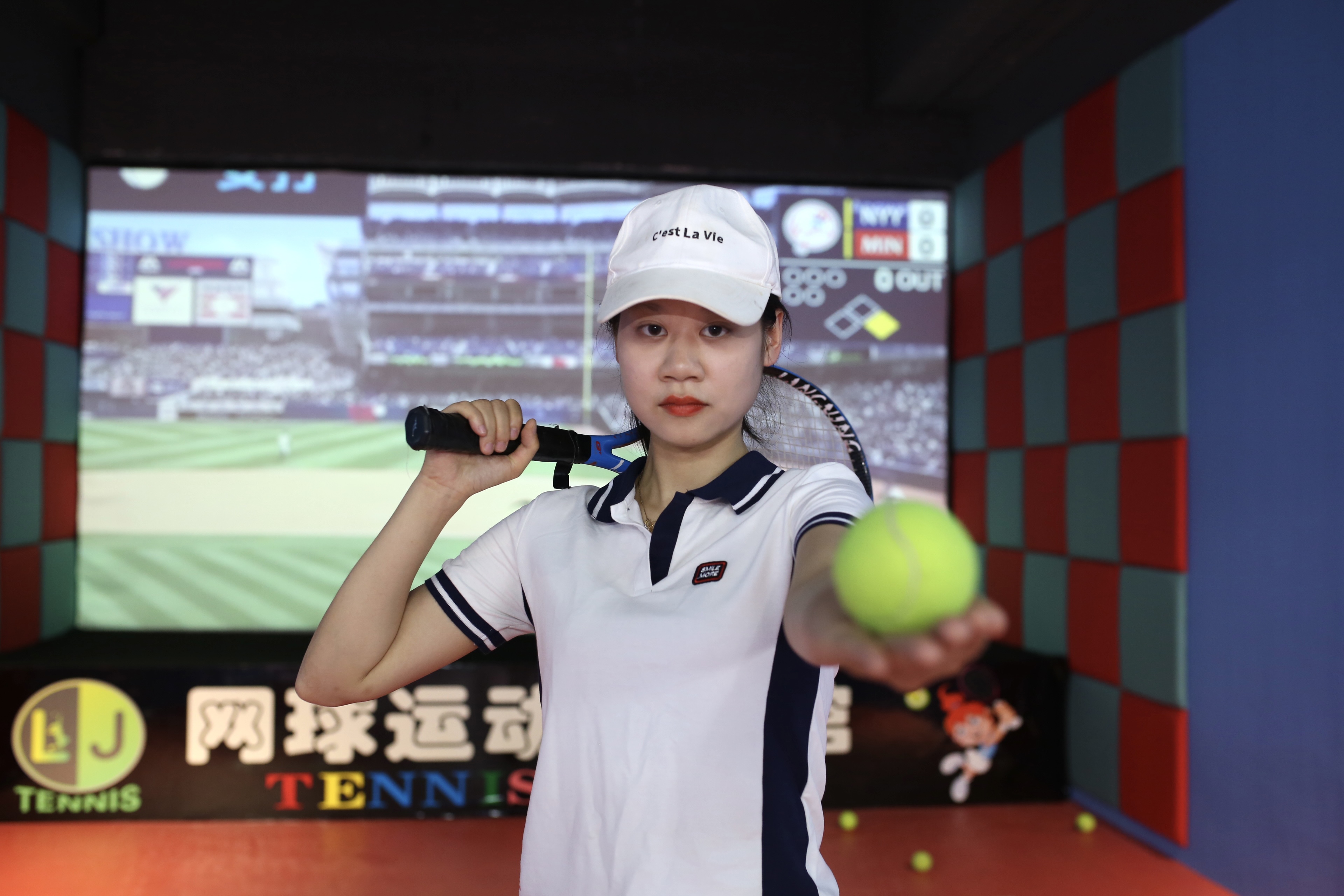
Chfuntek's commercial indoor tennis simulator is designed for venue operation — club, FEC, hotel, and entertainment venue contexts where commercial-grade durability, automatic ball feeding and return, and multi-mode game content are the requirements. The system uses real rackets and balls with sensor and projection technology tracking each shot autonomously, delivering responses without manual input between sessions.
The three game modes — Practice Mode, Training Mode, and Skill Challenge Mode — follow the commercial experience progression described above: accessible entry, skill development, and competitive repeat motivation. Factory-trained engineers handle on-site installation, operator training is included as standard, and the system is built to commercial durability specifications rather than adapted from a lighter-use product.
For tennis clubs evaluating an indoor tennis simulator as an off-court attraction, or entertainment operators adding tennis to an existing mix, the best starting point is a direct configuration consultation covering available space, ceiling height, expected daily usage, and target audience.
Exploring an Indoor Tennis Simulator for Your Club or Venue?
Contact the Chfuntek team for a configuration consultation and complete project quote — tailored to your available space, ceiling height, and commercial requirements.
Talk to the Chfuntek TeamIndoor Tennis Simulator FAQ
What is an indoor tennis simulator?
An indoor tennis simulator is a system that uses real rackets and balls, automatic ball feeding, sensor technology, and a large screen to recreate tennis gameplay indoors without a full court. Players physically hit real balls; the system tracks impact and delivers on-screen responses in real time.
How much space does an indoor tennis simulator require?
Home setups need approximately 20 feet of depth, 10 feet of width, and 9 to 11 feet of ceiling height. Commercial installations typically require 20 to 25 feet of depth and 12 to 14 feet of ceiling clearance to accommodate full swing arc and overhead motions safely.
How much does an indoor tennis simulator cost?
Home configurations range from about $3,000 for basic setups to $30,000+ for full interactive systems. Commercial installations for clubs and entertainment venues typically run $20,000 to $60,000+ complete, covering hardware, screen, installation, commissioning, and initial support.
Is an indoor tennis simulator the same as a tennis ball machine?
No. A ball machine only feeds balls for practice. An indoor tennis simulator adds sensors and a screen-based game layer that scores shots, responds to placement, and supports multiple game modes, which makes it suitable for entertainment as well as training.
Can an indoor tennis simulator be used for both practice and entertainment?
Yes. Systems with multiple game modes serve both purposes: a training-focused mode for skill development and a competitive scored mode for social entertainment and group play. The same installation serves serious players and casual guests without reconfiguration.
Does an indoor tennis simulator require staff to operate between sessions?
A commercial system with automatic ball feeding and return does not require dedicated staff between sessions. The system cycles ready for the next player group autonomously, which is essential for commercial viability during peak operating hours.
What game modes should a commercial indoor tennis simulator include?
At minimum: a casual accessible mode for first-time players, a structured training mode for skill development, and a competitive scored mode with leaderboard mechanics for repeat visit motivation. Single-mode systems reach an engagement plateau too quickly for most commercial investment timelines.
Final Thoughts
An indoor tennis simulator makes sense at two very different scales: a home installation for the serious recreational player who wants year-round practice, and a commercial installation for clubs, FECs, hotels, and entertainment venues where the system is a revenue-generating attraction as much as a training tool. Requirements differ significantly in space, durability, automation, and game content, so evaluate each context on its own terms rather than applying one framework to both.
For commercial buyers, getting a complete project specification — covering space confirmation, full automation, game mode depth, and supplier after-sales support — before committing to any system is the most reliable way to make sure the investment performs on its intended timeline.
Exploring a commercial indoor tennis simulator for your club or venue? Contact the Chfuntek team for a configuration consultation and complete project quote.


