
The right indoor tennis simulator depends heavily on where it will be installed. A home user may prioritize compact installation, flexible practice, and entertainment, while a tennis club needs repeated daily operation, multiple skill levels, and low staff dependency. A sports center has an even broader requirement: the system needs to work for children, recreational players, competitive users, and groups within the same commercial environment.
This guide explains what home users, tennis clubs, and sports centers should consider when evaluating an indoor tennis simulator, including space requirements, expected costs, operating needs, game modes, and the commercial features that matter most.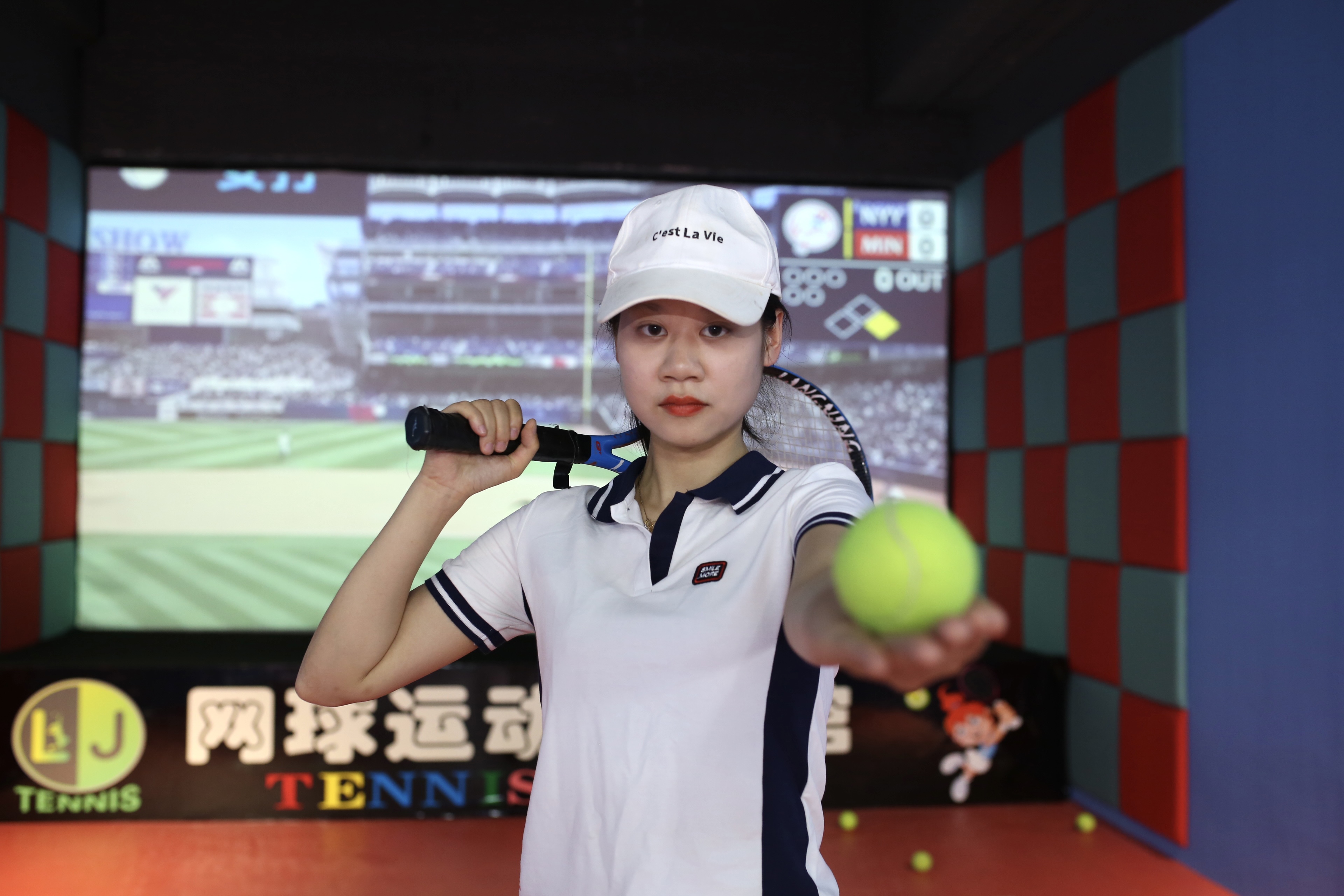
What Is an Indoor Tennis Simulator?
An indoor tennis simulator combines real rackets, real tennis balls, automatic ball feeding, sensor tracking, and projection technology to create an interactive tennis experience indoors.
Unlike a purely virtual tennis game, players physically hit real tennis balls. The system tracks the player's interaction and connects the physical action with digital gameplay, scoring, challenges, and training activities.
This makes an indoor tennis simulator useful in several environments, from private home practice to commercial tennis clubs and sports centers.
Focuses on year-round practice, entertainment, space efficiency, and convenient access without court bookings.
Requires repeated daily operation, multiple skill levels, automated ball handling, and programming flexibility.
Needs to serve children, adults, beginners, competitive players, and groups within the same installation.
Benefits from interactive game modes, visible scoring, automatic operation, and fast session turnover.
Indoor Tennis Simulator for Home Use
What Home Users Actually Need
A home indoor tennis simulator can be installed in spaces such as a finished basement, double garage, games room, or dedicated indoor studio. However, the most important specifications to check before purchasing are usually room depth, width, and ceiling clearance.
The practical minimum described in this guide is approximately 20 feet (6 meters) of depth from the hitting position to the screen, 10 feet (3 meters) of width for a comfortable swing arc, and 9 to 11 feet (2.7 to 3.3 meters) of ceiling clearance.
Ceiling height deserves particular attention. The actual lowest structural point should be measured, including beams, lighting equipment, HVAC ducts, and other overhead elements.
Features That Matter for Home Practice
Home users evaluating an indoor tennis simulator should consider variable ball delivery, tracking consistency, and game mode variety rather than focusing only on visual effects.
Different delivery speeds, angles, and heights can create more varied practice. Interactive game modes can also make the system useful for family play and social entertainment rather than limiting it to individual training.
Indoor Tennis Simulator Cost for Home Installations
Home configurations can vary considerably in price. Basic setups using a portable net and ball machine may start around $3,000 to $8,000, while more advanced systems with interactive gameplay, projection screens, automatic ball feeding, and software can reach approximately $10,000 to $30,000.
Custom installations can cost more depending on room preparation, electrical work, screen size, AV integration, and other installation requirements.
When comparing prices, it is useful to determine exactly what is included. Ball delivery capabilities, tracking technology, game content, screen configuration, installation, and after-sales support can make two systems with similar headline prices very different in actual value.
Indoor Tennis Simulator for Tennis Clubs
What Clubs Need That Home Systems Don't
A tennis club has very different operational requirements from a private home. The simulator may need to operate through multiple sessions every day, accommodate players with different skill levels, and remain engaging for members who use it repeatedly.
For this reason, commercial club installations should pay particular attention to ball feeding durability, automatic ball return, multiple game modes, adjustable difficulty, and operational simplicity.
Staff dependency is another important consideration. If employees must retrieve balls, reset the system, or manually configure every session, the simulator becomes more labor-intensive as utilization increases.
Programming Opportunities for Tennis Clubs
An indoor tennis simulator can support a variety of club activities, including junior coaching sessions, off-season training, member competitions, accuracy challenges, beginner introduction sessions, and leaderboard-based events.
These formats allow clubs to use the same installation for training, member engagement, group activities, and additional programming.
Space Requirements for Club Installation
The commercial club configuration described in this guide requires approximately 20 to 25 feet (6 to 7.6 meters) of depth and 12 to 14 feet (3.7 to 4.3 meters) of ceiling clearance.
Width should also allow a full swing arc and appropriate spectator clearance. Before finalizing a floor plan, operators should confirm the exact dimensions and safety clearance requirements with the equipment supplier.
Indoor Tennis Simulator for Sports Centers
The Multi-Demographic Challenge
Sports centers typically serve a wider audience than tennis clubs. Children, recreational adults, competitive players, families, and older users may all use the same system during a single operating day.
This makes adjustable difficulty and multiple game formats particularly important. A system should be accessible to first-time users while still offering meaningful challenges for more experienced players.
From a commercial perspective, sports centers also need to consider session throughput. Automatic operation, fast reset, and reduced manual ball handling can make the attraction easier to operate during busy periods.
Integration Into a Sports Center's Broader Offering
An indoor tennis simulator can support group lessons, corporate activities, school visits, birthday parties, seasonal sports programs, and competitive challenges.
The system therefore needs to function as more than an individual training tool. Multiplayer game formats, visible scoring, and competitive challenges can make the installation suitable for group participation and social entertainment.
What to Look for in a Commercial Indoor Tennis Simulator
For clubs and sports centers, several features should be evaluated before purchasing an indoor tennis simulator.
Automatic Ball Feeding and Return
Automatic ball delivery allows the system to provide repeated shots without manual feeding. Automatic ball return can further reduce the need for players or staff to retrieve balls between sessions.
Multiple Game Modes
Commercial installations benefit from different experiences for different users. Practice, training, and competitive skill challenges can extend the system beyond simple repetition.
Adjustable Difficulty
A commercial simulator may need to serve beginners and experienced players within the same day. Adjustable delivery and difficulty settings make it easier to accommodate different user groups.
Commercial Durability
Equipment used in clubs and sports centers may operate much more frequently than a residential system. Buyers should therefore evaluate construction quality, ball-feeding mechanisms, screen durability, service support, and spare-parts availability.
Installation and Technical Support
Commercial projects require more than equipment delivery. Space planning, installation, operator training, commissioning, maintenance guidance, and technical support can all affect the long-term operation of the system.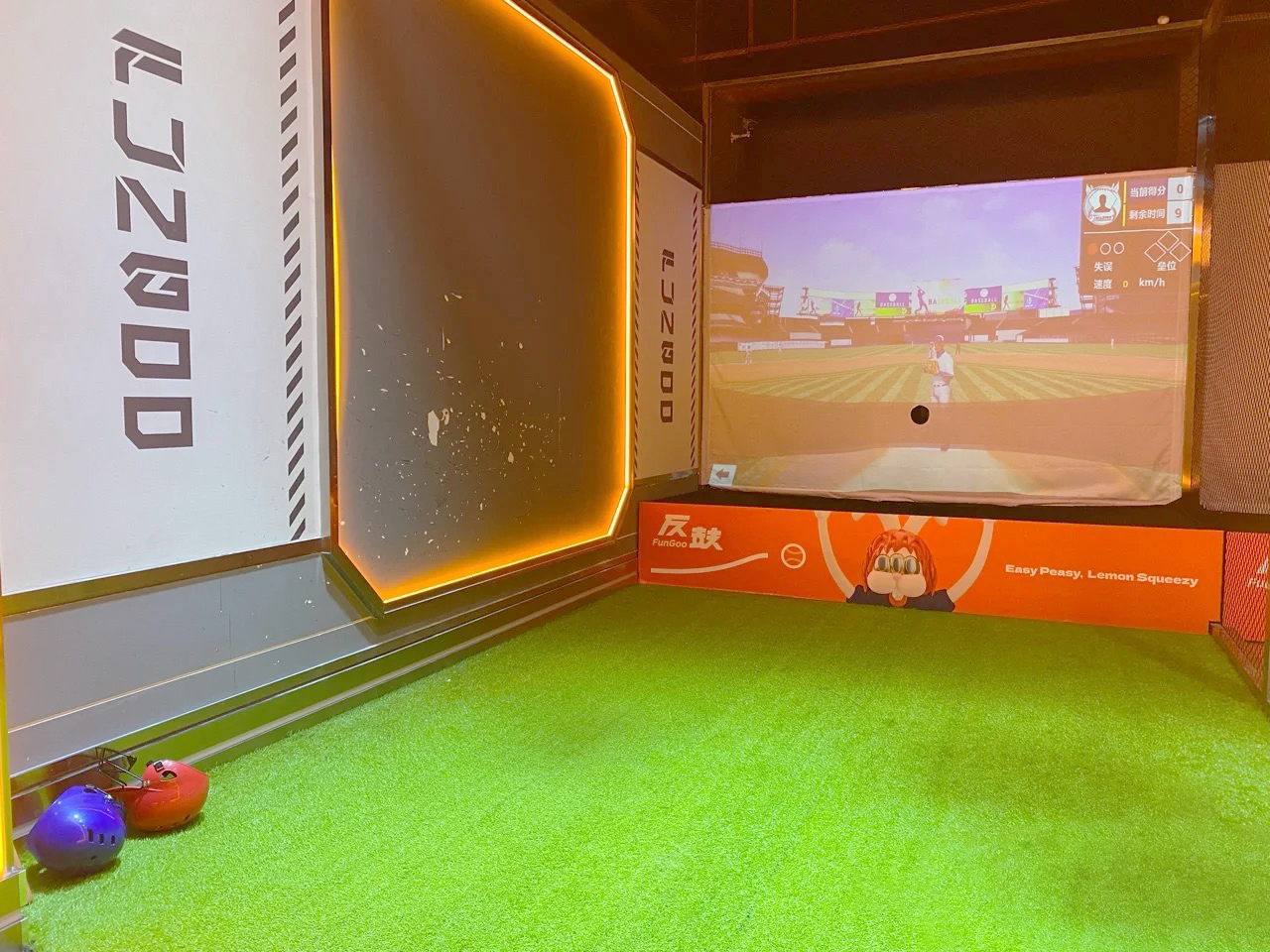
Chfuntek Indoor Tennis Simulator for Commercial Applications
Chfuntek's commercial indoor tennis simulator is designed around the requirements of tennis clubs and sports centers while also being available for private installation.
Real rackets and real balls — players physically interact with the system rather than relying on a purely virtual controller-based experience.
Automatic ball feeding — delivers tennis balls to support repeated practice and interactive gameplay.
Full-cycle ball return — helps reduce manual ball retrieval between sessions.
Practice Mode — designed for accessible casual use and basic practice.
Training Mode — supports structured skill development.
Skill Challenge Mode — introduces competitive scoring and leaderboard-style challenges.
Commercial installation support — Chfuntek provides installation and operator training for commercial projects.
Flexible applications — suitable for tennis clubs, sports centers, entertainment venues, and selected private installations.
For commercial buyers, the main advantage is the ability to use one installation across multiple purposes: training, skill challenges, group activities, and interactive entertainment.
Ready to Evaluate an Indoor Tennis Simulator?
Contact the Chfuntek team to discuss your venue type, available space, installation requirements, and indoor tennis simulator configuration.
Talk to the Chfuntek TeamFrequently Asked Questions
What is an indoor tennis simulator?
An indoor tennis simulator combines real rackets and real balls with automatic ball feeding, sensor tracking, and projection technology to recreate tennis gameplay indoors. Players physically hit real balls while the system tracks their interaction and provides digital scoring, challenges, training, or game content.
What space does an indoor tennis simulator need at home?
The practical dimensions described in this guide are approximately 20 feet (6 meters) of depth, 10 feet (3 meters) of width, and 9 to 11 feet (2.7 to 3.3 meters) of ceiling clearance. Exact requirements depend on the specific system and installation configuration.
What space does a commercial indoor tennis simulator need?
A commercial installation may require approximately 20 to 25 feet (6 to 7.6 meters) of depth and 12 to 14 feet (3.7 to 4.3 meters) of ceiling clearance, together with enough width for a full swing arc and spectator clearance. Exact dimensions should be confirmed with the supplier.
How much does an indoor tennis simulator cost?
Home systems can range from approximately $3,000 for basic configurations to $30,000 or more for advanced interactive systems. Commercial installations can cost more depending on equipment configuration, projection system, installation, and project requirements.
What game modes should an indoor tennis simulator include?
Useful commercial game formats include accessible practice, structured training, and competitive skill challenges. Multiple modes allow the same installation to serve beginners, regular players, groups, and users looking for competitive entertainment.
Can Chfuntek's tennis simulator be used in commercial venues?
Yes. Chfuntek's indoor tennis simulator is designed for commercial applications such as tennis clubs and sports centers and can also be configured for other indoor entertainment environments.
Final Thoughts
An indoor tennis simulator can serve very different purposes depending on the installation environment. Home users may prioritize convenient practice and entertainment, while tennis clubs need reliable daily operation and flexible programming. Sports centers require a broader combination of accessibility, automation, competitive gameplay, and commercial usability.
Before purchasing, buyers should evaluate the available space, ceiling height, ball delivery system, tracking technology, game modes, automation, construction quality, installation requirements, and after-sales support.
For commercial projects, the most important question is not simply whether an indoor tennis simulator can recreate tennis indoors, but whether the system can support the way your venue intends to operate it.
Looking for an indoor tennis simulator for your home, tennis club, sports center, or entertainment venue? Contact the Chfuntek team for a configuration recommendation and project quote.


