The sports and entertainment industry has undergone significant changes in recent years. Consumers are no longer looking for passive entertainment; they want interactive experiences that combine competition, technology, and social engagement. As a result, the Indoor Soccer Field business has become one of the fastest-growing segments within the recreational sports market.
From community sports centers and family entertainment venues to private clubs and hotel resorts, investors are increasingly exploring whether an Indoor Soccer Field can generate sustainable profits. While the initial investment can be substantial, the right business model can create multiple revenue streams and long-term customer loyalty.
So, is an indoor soccer facility a profitable investment? Let's take a closer look.

Why the Demand for Indoor Soccer Fields Is Growing
Soccer remains the world's most popular sport, attracting billions of fans across all age groups. However, traditional outdoor fields face several limitations, including weather conditions, seasonal fluctuations, and high maintenance costs.
An Indoor Soccer Field addresses many of these challenges by providing a controlled environment where games, training sessions, and events can take place year-round.
Several market trends are driving growth:
-
Increased demand for youth sports programs
-
Rising interest in recreational leagues
-
Growth of sports-based entertainment venues
-
Demand for weather-independent activities
-
Expansion of mixed-use entertainment facilities
Many venue owners are also incorporating technology-driven attractions such as interactive soccer games and soccer simulators to attract a wider audience and increase customer engagement.
For investors looking at the broader indoor sports facility business, soccer continues to offer one of the strongest opportunities due to its global popularity and broad demographic appeal.
Understanding Startup Costs
Before launching an Indoor Soccer Field, it is important to understand the primary investment categories.
1.Facility Construction or Leasing
The largest expense is usually the facility itself. Depending on location and size, costs may include:
2.Equipment and Amenities
Beyond the playing area, successful venues often invest in:
-
Spectator seating
-
Locker rooms
-
Scoreboards
-
Food and beverage areas
-
Training zones
-
Interactive attractions
Many operators now add a commercial indoor soccer field entertainment area featuring soccer simulators. These attractions require less space than a full-size field while generating additional revenue through individual gameplay sessions.
3.Marketing and Staffing
Launching a new sports venue requires ongoing marketing efforts, including:
-
Local advertising
-
Social media campaigns
-
Community partnerships
-
League promotion
-
Event marketing
A detailed financial plan is essential to ensure profitability during the early stages of operation.
Revenue Streams That Drive Profitability
The most successful Indoor Soccer Field businesses generate income from multiple sources rather than relying solely on field rentals.
1.Field Rentals
Hourly bookings remain the foundation of most operations. Teams, schools, clubs, and recreational groups regularly rent indoor fields for practices and matches.
2.Youth Training Programs
Parents are willing to invest in sports development opportunities for their children. Structured coaching programs can provide a steady source of recurring revenue.
3.Recreational Leagues
Adult and youth leagues create predictable income throughout the year while building a loyal customer base.
4.Corporate Events and Team Building
Businesses frequently seek unique venues for employee engagement activities. Soccer tournaments and interactive competitions are increasingly popular options.
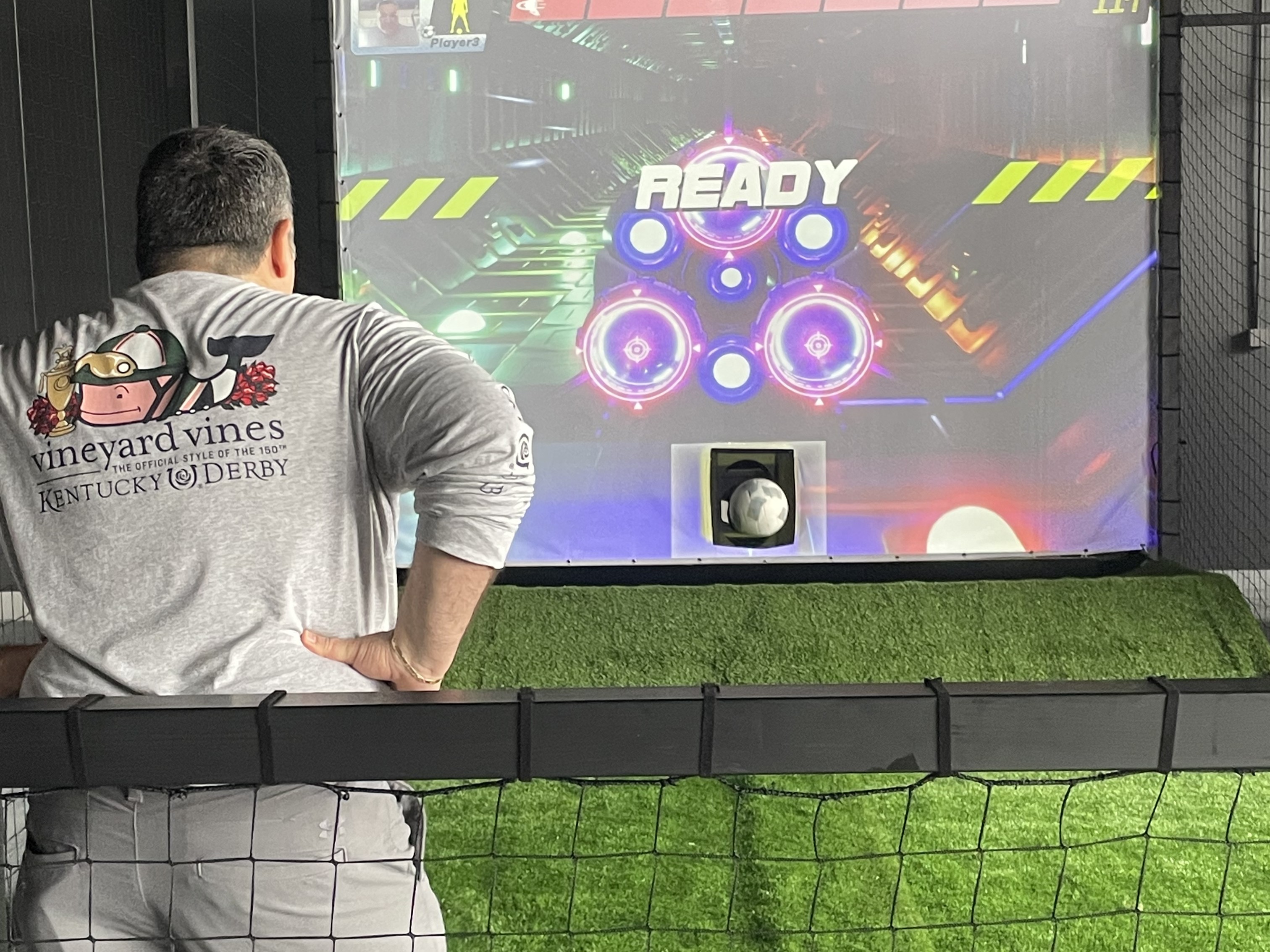
5.Interactive Soccer Attractions
Many modern facilities now include a soccer simulator zone alongside the main field.
Features such as:
-
Immersive User Experience
-
Highly Interactive Competitive Experience
-
Supports Single-Player Challenge and Two-Player Battle Mode
-
Entertainment + Training Dual Modes
allow operators to attract casual visitors who may not participate in traditional soccer matches.
This type of indoor soccer entertainment center model can significantly increase overall revenue while maximizing facility usage.
How Technology Is Changing Indoor Soccer Facilities
Today's customers expect more than a simple playing surface. They want memorable experiences that can be shared online and enjoyed with friends and family.
This shift has encouraged many operators to invest in interactive sports technology.
Soccer Simulators as Revenue Multipliers
A soccer simulator can complement an Indoor Soccer Field by offering entertainment during off-peak hours.
Unlike a traditional field, simulators can operate continuously and serve multiple customer segments, including:
-
Families
-
Corporate groups
-
Casual players
-
Soccer enthusiasts
-
Youth training programs
Advanced systems now include:
-
9 Popular Game Modes
-
Multi-Speed Automatic Ball Launch Adjustment
-
High-Efficiency Automatic Ball Return System
-
Supports Multiple Difficulty Levels
These features create a highly engaging environment that encourages repeat visits.
Additionally, social-media-friendly gameplay provides Built-in Viral Marketing Potential, helping venues gain organic exposure without significant advertising costs.
For investors exploring soccer facility revenue opportunities, technology-driven attractions can provide a valuable competitive advantage.
Factors That Influence Long-Term Success
Not every Indoor Soccer Field becomes profitable. Several key factors determine long-term performance.
1.Location
Accessibility is critical. Facilities located near residential communities, schools, or commercial districts typically perform better.
2.Market Demand
Understanding local demographics helps determine:
3.Operational Efficiency
Modern operators prioritize solutions that reduce labor costs while improving customer experience.
Features such as automated ball systems and user-friendly software make it easier to manage attractions with minimal staffing requirements.
4.Customer Experience
Successful venues focus on delivering experiences rather than simply providing access to a field.
Interactive games, competitions, tournaments, and social activities encourage customers to stay longer and spend more.
This is especially important in today's competitive sports entertainment venue market.

Is an Indoor Soccer Field Worth the Investment?
For many entrepreneurs and venue operators, the answer is yes—provided the business model is carefully planned.
A modern Indoor Soccer Field offers several advantages:
Facilities that combine traditional soccer activities with interactive entertainment often outperform those that rely solely on field rentals.
Adding attractions such as soccer simulators, digital competitions, and skill-based challenges can help increase customer dwell time, improve visitor satisfaction, and generate additional income.
Investors who embrace innovation are often better positioned to adapt to changing consumer expectations.
Conclusion
The Indoor Soccer Field industry continues to benefit from strong consumer demand, growing interest in active entertainment, and the increasing popularity of soccer worldwide.
While startup costs can be significant, the long-term earning potential is equally compelling. Revenue from field rentals, leagues, training programs, events, and interactive attractions creates a diversified business model that can remain profitable throughout the year.
For operators seeking to maximize returns, combining a traditional indoor soccer facility with immersive entertainment solutions such as soccer simulators can unlock new opportunities for growth. As customers increasingly seek engaging and technology-enhanced experiences, the future of the Indoor Soccer Field business looks brighter than ever.


