
This guide covers the exact weights and dimensions for every major bowling pin type, explains why pin weight affects gameplay and operator decisions, and helps venue buyers choose the right format for their specific context.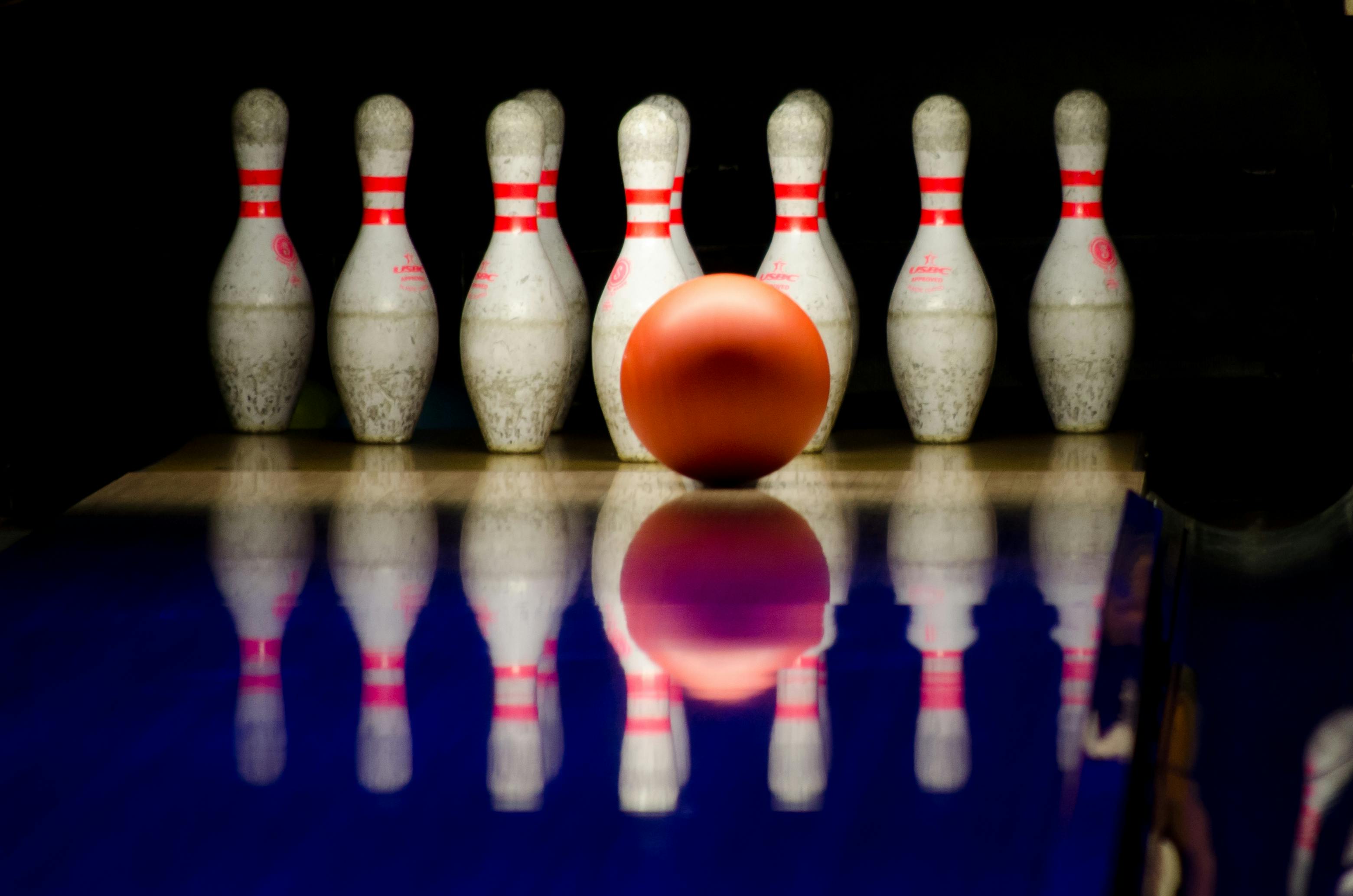
How Much Do Bowling Pins Weigh Across All Major Formats?
A regulation ten-pin bowling pin weighs between 3 pounds 6 ounces and 3 pounds 10 ounces (1.54 to 1.64 kg), with most weighing approximately 3 pounds 8 ounces (1.59 kg). The narrow weight tolerance — just 4 ounces across the permitted range — ensures minimal variation between pins on the same lane, which is essential for competitive integrity and predictable pin action.
| Format | Pin Weight | Pin Height | Key Characteristic |
|---|---|---|---|
| Ten-Pin | 3 lb 6 oz – 3 lb 10 oz (1.54–1.64 kg) |
15 in (38.1 cm) | Standard commercial format worldwide |
| Duckpin | ~1 lb 8 oz (~0.68 kg) |
9.5 in (24.1 cm) | Shorter, lighter; harder to get a strike; 3 rolls per frame |
| Candlepin | ~2 lb 8 oz (~1.13 kg) |
15.75 in (40 cm) | Tall, thin; fallen pins stay on lane |
| Five-Pin | ~2 lb 5 oz (~1.1 kg) |
12.5 in (31.75 cm) | Primarily Canadian; V-formation |
| Mini Bowling | ~1.75 lb (~0.79 kg) |
9–12 in | Compact format; FEC and family venues |
Ten-Pin Bowling Pins
At the mandated weight range, ten-pins hook predictably, allowing skilled bowlers to plan spare shots and carry patterns with reasonable confidence. Variations outside the accepted range can make strikes too easy or nearly impossible, disrupting league rules and competitive balance. Ten-pin pins are constructed from hard maple wood cores laminated in multiple layers, then coated with a durable plastic shell. The base diameter is 2 inches, the widest point measures 4.7 inches, and the overall height is 15 inches — proportions that have remained essentially unchanged since USBC standardization.
Duckpin Bowling Pins
Duckpin bowling pins stand just 9.5 inches tall with a base diameter of 1.4 inches and a center diameter of 4.1 inches. The reduced size and weight — combined with the smaller ball — make it more difficult to achieve a strike than in ten-pin bowling. For this reason, similar to candlepin bowling, duckpin bowlers are allowed three rolls per frame. The lighter pin weight combined with the smaller ball creates a fundamentally different game dynamic: more skill required for strikes, faster game flow, and an experience that many operators find genuinely engaging for social venue contexts.
Candlepin Bowling Pins
Candlepin bowling pins weigh approximately 2.4 pounds (about 1.1 kilograms) — lighter than ten-pin but notably taller and thinner, with a distinctive elongated shape (typically 15.75 inches high with a narrow 2.1 to 3-inch diameter range). The format is notable because fallen pins are left on the lane rather than cleared — they become obstacles or potential advantages on subsequent deliveries in the same frame, adding a strategic layer absent in other formats.
Five-Pin Bowling Pins
Five-pin bowling pin weights run around 2 pounds 5 ounces (1.1 kg). Five-pin is predominantly a Canadian format, using five pins arranged in a V-formation rather than the triangular ten-pin rack. The lighter pins and smaller ball make it accessible for a broader age range than standard ten-pin, which partly explains its sustained commercial presence in Canadian markets.
Mini Bowling Pins
Mini bowling uses lighter, smaller pins proportional to the shorter lane format. Pin weight in mini bowling typically runs approximately 0.79 kg (around 1.75 lb) — light enough for young children to handle safely without risking injury from a missed pin impact. Mini bowling equipment — specifically designed without finger holes, with lighter balls and a 12-meter lane — is purpose-built for child participation from approximately age 4 upward, making it one of the most commercially versatile compact bowling formats available.
Why Bowling Pin Weight Matters for Venue Operators
For players, pin weight is mostly background information. For venue operators and purchasing managers evaluating a bowling format, it's directly relevant to several commercial decisions.
Format Selection and Target Audience
Heavier pins made from quality materials resist chipping and denting, but they also demand stronger racks and careful manual handling. The reverse is also true: lighter pins in formats like mini bowling and duckpin are inherently more accessible to younger players and casual guests, which broadens the potential paying audience from a single installation. A venue operator choosing between ten-pin and mini bowling isn't just choosing a pin weight — they're choosing an audience. Ten-pin's heavier pins and longer lane suit adult recreational and competitive bowlers. Mini bowling's lighter pins and shorter lane suit families, children, and casual social groups. The commercial implication is that each format speaks to a different customer profile and a different revenue structure.
Pinsetter Compatibility
Pin weight determines which pinsetter systems can be used. Standard ten-pin pinsetters — both free-fall and string — are calibrated for the regulation pin weight range. Lighter formats require different pinsetter mechanisms. Mini bowling equipment uses a pinsetter designed specifically for the lighter pins and shorter lane format. For operators evaluating a new installation or a format change, confirming pinsetter compatibility with the intended pin format is a practical first step before any other specification discussion.
Maintenance and Replacement Cycles
There is no universal replacement interval for commercial bowling pins. Service life depends on bowling volume, pin construction, pinsetter type, rotation practices, maintenance procedures, physical impact damage, and the requirements of recreational or certified play. In practice, high-volume commercial venues typically rotate and replace pins on a usage-based schedule rather than a fixed calendar interval. The pin material — hard maple core with plastic coating in most commercial formats — is the dominant factor in service life, independent of format.
A key commercial consideration: heavier regulation ten-pin pins have a longer absolute service life under equivalent ball impact energy, because more of that energy disperses through the larger rack rather than concentrating in a single pin. Lighter format pins take less impact per delivery but may require closer monitoring in high-volume FEC environments where multiple sessions run back-to-back daily.

How Chfuntek's Bowling Equipment Connects to Format Choice
For operators moving from understanding pin specifications to evaluating actual commercial bowling equipment, the format decision flows directly into the equipment specification.
Chfuntek's Engin Strike string-pin bowling system is built around the standard ten-pin format — all-metal, fully mechanical construction designed for 24/7 commercial operation, with USBC-certified lane surfaces rated for 10+ years of use and a 0.8-second ball return system. The engineering premise is exactly what commercial venue operators need from heavier-pin, regulation-format bowling: a system that handles sustained high-volume use without the maintenance escalation that free-fall systems produce as they age.
For operators leaning toward a compact format — mini bowling or duckpin — Chfuntek's mini bowling system applies the same commercial durability philosophy at a smaller scale, with a free-fall pinsetter and chain-driven motor designed for the lighter pins and shorter lanes that make compact bowling viable in spaces where full ten-pin isn't feasible.
Understanding pin weight is where format evaluation starts. The equipment that handles those pins reliably across years of commercial operation is where it ends.
Planning a Bowling Installation?
Tell the Chfuntek team your available space and target audience — and get a format recommendation and equipment quote tailored to your specific context.
Talk to the Chfuntek TeamFrequently Asked Questions
How much do bowling pins weigh in standard ten-pin bowling?
A regulation ten-pin bowling pin weighs between 3 pounds 6 ounces and 3 pounds 10 ounces (1.54 to 1.64 kg). Most are manufactured to approximately 3 pounds 8 ounces (1.59 kg). The tight 4-ounce tolerance ensures consistent pin action across all pins on the same lane.
How much does a duckpin bowling pin weigh?
Duckpin bowling pins are significantly lighter than ten-pin pins, standing just 9.5 inches tall with a center diameter of approximately 4.1 inches. The reduced size and weight — combined with a smaller ball — make strikes harder to achieve, which is why duckpin rules allow three rolls per frame.
How much does a candlepin bowling pin weigh?
Candlepin bowling pins weigh approximately 2.4 pounds (1.1 kg). They are taller and thinner than ten-pin pins, with a distinctive elongated shape, and fallen pins remain on the lane as live obstacles during subsequent deliveries in the same frame.
How much does a mini bowling pin weigh?
Mini bowling pins weigh approximately 0.79 kg (around 1.75 lb) — light enough for children as young as 4 to play safely. The reduced pin weight, combined with a lighter ball and shorter lane, is what makes mini bowling practical as a family entertainment venue attraction.
Does bowling pin weight affect gameplay significantly?
Yes. Heavier pins like ten-pin require more ball energy to produce reliable strikes and create specific carry patterns that experienced bowlers learn to exploit. Lighter formats like duckpin and candlepin make strikes genuinely more difficult because less energy transfers through the rack — which is why those formats compensate with additional rolls per frame.
What are bowling pins made from, and how does material affect weight?
Commercial bowling pins are typically manufactured with a hard maple wood core laminated in multiple layers, then coated with a plastic shell. The wood core provides density and shock resistance; the plastic coating adds durability and contributes minor additional weight. Some pins include internal weight blocks to fine-tune balance for competitive consistency.
How do I know which bowling pin format is right for my venue?
The format decision hinges on audience profile and available floor space. Ten-pin suits adult recreational and competitive players in venues with 20-plus meters of depth. Mini bowling suits families and casual guests in spaces of 12 to 14 meters. Duckpin occupies a social adult niche with a footprint between the two. A direct equipment consultation is the most reliable path to the right answer for your specific space.
Final Thoughts
Bowling pin weight is the starting specification for any format decision — and understanding the differences across ten-pin, duckpin, candlepin, five-pin, and mini bowling clarifies why each format serves a different audience and requires different equipment. For venue operators, the practical application of this information is straightforward: pin weight and format determine the audience you can serve, the pinsetter technology you need, and the maintenance profile you'll manage across years of commercial operation.
Getting those decisions right before committing to a layout and equipment purchase saves significantly more money than finding the lowest per-pin price.
Planning a bowling installation and evaluating which format fits your venue? Contact the Chfuntek team for a format consultation and equipment quote tailored to your space and audience.


